Camatkarasana (Wild Thing Pose): How to Do It Step by Step

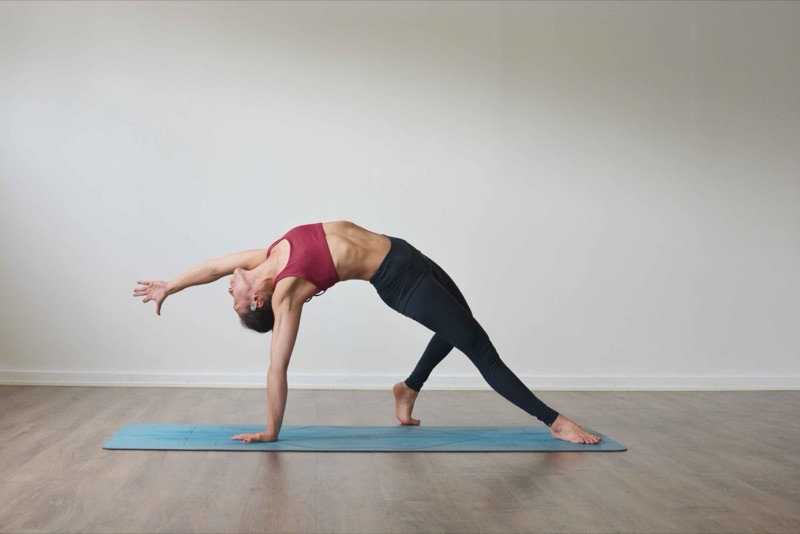
Camatkarasana (Wild Thing Pose) is a one-arm backbend in which you balance on one hand and the outer edge of one foot, lift your hips high, step the other foot behind you and reach your free arm overhead. It combines the arm strength of Vasisthasana (Side Plank) with an open chest and a stretch through the front of the top hip. It is a modern pose, common in Vinyasa classes, and an intermediate one: the supporting shoulder and wrist carry most of your weight.
Pose type: arm balance, backbend, side-body opener. Level: intermediate. Props: none, or a block under the top foot while you learn it.
What Camatkarasana means
The Sanskrit camatkara (the c is said as a soft ch) means astonishment, wonder or delight, and asana means seat or posture. The full name is said cha-mat-kar-AH-sa-na. You will often see it translated as "the ecstatic unfolding of the enraptured heart". That line is a poetic gloss that spread through studio culture, and it is not a literal translation. "Wild Thing" is the English name most teachers use.
The pose is young. You will not find it in the Hatha Yoga Pradipika or in B.K.S. Iyengar's Light on Yoga. It became popular in North American flow classes, and Anusara Yoga is usually credited with giving it the Sanskrit name.
How to do Wild Thing Pose, step by step
Warm up first. A few rounds of Sun Salutations, two side planks and a low lunge for the hip flexors are enough.
- Start in Adho Mukha Svanasana (Downward-Facing Dog). Lift your right leg into Three-Legged Dog.
- Bend the right knee and let the right hip open toward the ceiling, heel reaching toward the left buttock.
- Shift your weight forward into your left hand until the left shoulder sits roughly over the wrist. Roll onto the outer edge of the left foot, as in Side Plank.
- Keep the right knee bent and let the right foot drop behind you onto the floor, toes pointing back, a little wider than the left foot. The ball of the foot takes some weight.
- Press the floor away with the left hand so the shoulder blade stays wide on your back. Squeeze your glutes and lift your hips high.
- Reach your right arm overhead toward the front of the mat, palm facing down. Let the chest turn up toward the ceiling. Keep the neck long: look up only if it feels easy, otherwise let the head rest in line with the spine.
- Stay for 3-5 breaths. To come out, lift the right foot, bring the right hand back to the floor, pass through Three-Legged Dog and lower the leg into Downward Dog. Repeat on the other side.
Many teachers prefer to come into the pose from Side Plank instead. You set the supporting hand under the shoulder first, then step the top foot back. It asks less of the shoulder than flipping over from Downward Dog, where the hand often ends up too far forward.
Benefits of Wild Thing Pose
Camatkarasana gives you a lot of work and a lot of stretch in one shape.
- Front body: it stretches the chest, the front of the top shoulder and the hip flexors of the leg that steps back. Our guide to the hip flexors and the psoas explains why that part often feels tight.
- Supporting arm and shoulder: the triceps and the muscles around the shoulder blade and rotator cuff hold you up, much as they do in Side Plank.
- Back of the body: the glutes and the muscles along the spine lift the hips and carry the backbend.
- Balance: with one hand and one foot as the base, you learn to stay steady on a small, turning support.
Old descriptions say Wild Thing stretches the lungs or opens the heart. The first has no mechanism behind it. The second is a metaphor for an open chest, and it works fine as one.
Who should skip or modify Wild Thing
- Shoulder problems: skip it with a shoulder injury, a history of dislocation or pain in the rotator cuff. The supporting shoulder is loaded while it turns, which is a lot for an unstable joint. Stay in Side Plank or try the reverse tabletop version below.
- Wrist pain or carpal tunnel: the wrist takes weight in full extension. Come down onto the forearm in a forearm side plank, or leave the pose out.
- Lower back pain: keep the backbend small and the glutes working, so the bend spreads through the upper back.
- Pregnancy: the balance and the deep front-body stretch get harder as pregnancy goes on. Ask your midwife or doctor, and choose Side Plank with the lower knee down if you practise at all.
- Come out if you feel sharp pain in the shoulder or wrist. Effort in the muscles is expected. Pain in the joint is a signal to stop.
Our 10 tips to avoid yoga injuries cover the general rules.
Common mistakes
- Hand too far forward. After the flip from Downward Dog the supporting hand is often ahead of the shoulder. Walk it back until the arm is close to vertical.
- Sinking into the shoulder. When the shoulder drops toward the ear, the joint takes the weight instead of the muscles. Push the floor away.
- Hips dropping. Without the glutes the backbend collapses into the lower back. Lift the hips first, then open the chest.
- Cranking the neck. Throwing the head back does not deepen the pose. Keep the back of the neck long.
- Top foot too close. A foot right behind the bottom leg narrows the base. Step it back and a little wider.
- Holding the breath. Short breaths are fine. If you cannot breathe at all, the pose is too deep today.
Preparatory poses
- Plank Pose: arm and core strength with the hands under the shoulders.
- Vasisthasana (Side Plank): the same base on one hand and one foot. Hold it for five steady breaths on each side before you try Wild Thing.
- Anjaneyasana (Low Lunge): opens the hip flexors of the back leg.
- Setu Bandha Sarvangasana (Bridge Pose): teaches you to lift the hips with the glutes.
- Ustrasana (Camel Pose): a supported backbend that opens the chest and the fronts of the hips.
Amaranta Aguilar's Side Planks is a 15-minute flow that builds the shoulder strength Wild Thing needs, and Wrist Mobility is ten minutes of preparation for the supporting wrist.
Follow-up poses
- Urdhva Dhanurasana (Wheel Pose): a deeper backbend on both hands and feet. Some teachers move from Wild Thing into Wheel by placing the top hand on the floor.
- Urdhva Mukha Svanasana (Upward-Facing Dog): a backbend with both arms sharing the load.
- Balasana (Child's Pose): rest for the wrists and shoulders, and a gentle forward bend after the backbend.
Wild Thing variations
- Knee-down Wild Thing: from Side Plank with the lower knee on the floor, step the top foot back and reach the arm overhead. Less weight on the shoulder, same shape for the chest.
- Top foot on a block: a block under the top foot makes the step back shorter and the backbend smaller.
- Flip Dog: the same shape reached by flipping over from Three-Legged Dog, usually as a moving transition in a flow.
From reverse tabletop

Coming into the pose from a seated position gives the supporting shoulder a more stable start.
- Sit on the floor with your knees bent and your feet hip-width apart.
- Place your right hand on the floor behind you, fingertips pointing away from you.
- Press into your heels and your right hand, squeeze your glutes and lift your hips. Reach your left arm up and back over your head.
- Stay for a few breaths, then lower your hips slowly to the floor. Change sides.
For the whole shape in a class, Vinay Jesta's Shoulder Mobility for Backbends is 25 minutes of Vinyasa that teaches the shoulders to open the chest for backbends, level 2, with a block.
Frequently asked questions
Is Wild Thing a real yoga pose?
Yes, though a modern one. Camatkarasana does not appear in the classical texts or in Light on Yoga. It grew out of North American flow classes, and Anusara Yoga is usually credited with the Sanskrit name. Today it is taught in most Vinyasa and power yoga styles.
What level of yoga is Wild Thing Pose?
Intermediate. You need to hold Side Plank for five steady breaths on each side and be comfortable in a gentle backbend such as Camel or Bridge. With the lower knee on the floor, newer students can try the shape.
What is the difference between Wild Thing and Flip Dog?
The final shape is almost the same. Flip Dog usually names the movement of flipping over from Three-Legged Dog, often done as a quick transition in a flow. Wild Thing is the held pose, often entered from Side Plank with the hand placed under the shoulder. Teachers use the two names differently, so follow the cues in your class.
What does Camatkarasana mean?
Camatkara is Sanskrit for astonishment or wonder, and asana means posture. The popular translation, "the ecstatic unfolding of the enraptured heart", is a poetic reading of the name, not a literal one.
What is the hardest pose in yoga?
There is no agreed answer. It depends on your body: someone with open hips may find Lotus easy and a handstand out of reach. Wild Thing is demanding but reachable for most regular practitioners, while poses like Eka Pada Koundinyasana II or full Hanumanasana take years for many people.
Is Wild Thing bad for your shoulders?
It loads the supporting shoulder, so it can irritate a shoulder that is already injured or unstable. With the hand under the shoulder and the shoulder blade pressed away from the floor, the muscles carry the weight and most healthy shoulders handle it well.