Sasangasana (Rabbit Pose): How to Do It Step by Step

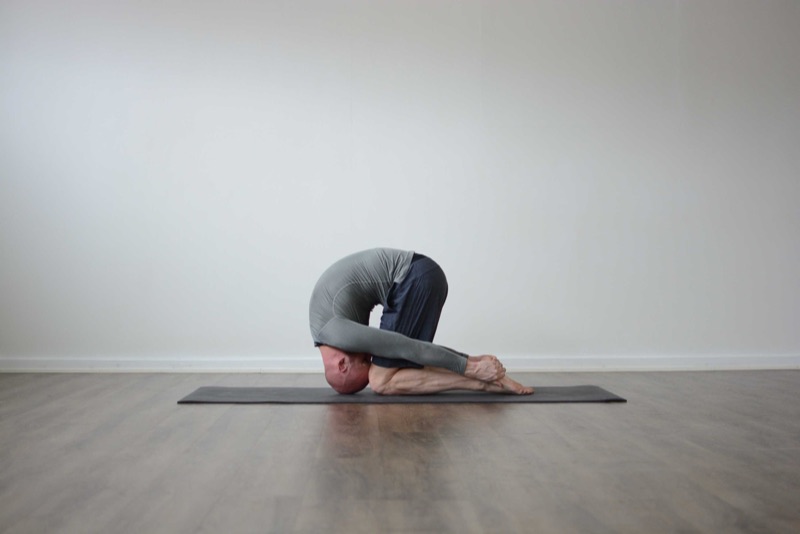
Sasangasana (Rabbit Pose) is a kneeling forward bend in which you hold your heels, rest the crown of your head on the floor near your knees and lift your hips, so the whole back rounds into a long curve. It is best known from the 26-posture Hot yoga sequence, where it comes right after Ustrasana (Camel Pose) as its counterpose. The weight on your head stays light: your hands pulling on your heels do most of the work.
Pose type: kneeling forward bend, spinal flexion. Level: beginner to intermediate. Props: a folded towel or blanket under the knees and head.
What Sasangasana means
The name is spelled in several ways: Sasangasana, Shashangasana, Sasankasana and Shashankasana. They all go back to the Sanskrit shasha, hare or rabbit, and asana, seat or posture. Shashanka, "marked with a hare", is also an old name for the moon, because in Indian stories the dark patches on the moon form a hare. That is why you sometimes see the pose called Moon Pose. The rounded back and tucked head look like a rabbit curled up on the ground.
Two different poses share the name. In the Bikram or Hot 26 sequence, Sasangasana is the version on this page, with the crown of the head down and the hips lifted. In many Indian Hatha schools, Shashankasana is a gentler fold: you sit on your heels, stretch the arms forward and lower the forehead to the floor, close to Balasana (Child's Pose). If a teacher says "hare pose", ask which one they mean.
How to do Rabbit Pose, step by step
- Kneel with your knees and feet hip-width apart, tops of the feet flat on the mat. Sit back on your heels, as in Vajrasana.
- Take a towel over your shoulders and hold its ends, or reach back and hold your heels with your thumbs on the outside and fingers on the inside.
- Tuck your chin toward your chest and look at your belly. Draw the belly in.
- Round forward slowly, one vertebra at a time, until your forehead touches your knees and the top of your head rests on the mat. Keep holding the heels.
- On an inhale, lift your hips toward the ceiling and roll forward onto the crown of the head. Your thighs come close to vertical.
- Pull on your heels as if you wanted to straighten your arms. That pull is what rounds the back and keeps the load off your neck. Most of your weight stays in your knees and shins, only a little in your head.
- Keep the forehead close to the knees. Breathe normally through the nose. Stay for 20 seconds to begin with.
- To come out, lower the hips back to the heels, then roll up slowly, head last. Sit for a few breaths before you move on.
In the Hot 26 class you do it twice, the second time a little shorter. The first round shows you where the stiff parts of your back are.
Benefits of Rabbit Pose
Rabbit Pose is one of the few poses that put the whole spine into flexion at the same time, from the lower back up to the neck. Halasana (Plow Pose) is another, done lying on the back.
- Back of the body: it stretches the muscles along the spine, the upper back between the shoulder blades and the back of the neck.
- Shoulders and arms: pulling on the heels works the arms and draws the shoulders back, which stretches the upper back further.
- Counterpose to backbends: after Camel, Wheel or a long series of backbends, rounding the other way gives the spine the opposite movement.
- Belly: drawing the belly in and folding the front of the body close works the abdominal muscles.
Many people like it at the end of a day at a desk. The long, rounded stretch of the upper back feels good after hours with the shoulders forward.
A lot of claims about Rabbit Pose go further. You read that it stimulates the thyroid, strengthens your defences against colds, cures insomnia, clears the sinuses or makes your hair grow. We found no study that tests any of this for Rabbit Pose. The hair claim rests on "more blood to the scalp", but blood flow to the head does not rise in any lasting way because you tip it down for 20 seconds, and hair loss has causes a pose does not reach. The thyroid claim comes from the chin-to-chest position, which the Hot 26 tradition links to Shoulder Stand and the throat lock, Jalandhara Bandha. That is tradition, and it is how we present it. The calm you feel afterwards comes from the slow breathing and the stillness, which you get in any quiet forward fold.
Who should skip or modify Rabbit Pose
The risk in Rabbit Pose sits in the neck. The cervical spine is flexed as far as it goes, and it carries some body weight. When the arms do not pull, the weight drops into the head.
- Skip it if you have a neck injury, a herniated disc in the neck or pain that runs down the arm. Balasana with the arms forward gives you a milder rounded stretch.
- Skip it if you have glaucoma, high blood pressure that is not under control, or a detached retina. Any head-down position raises pressure in the head and eyes.
- Take care with osteoporosis. Loaded spinal flexion is the movement most often advised against when the bones are thin. Ask your doctor or physiotherapist.
- Pregnant? Later in pregnancy the belly makes the fold hard, and many teachers leave the pose out. Choose a wide-knee Child's Pose.
- Knees: put a folded blanket under them, and under the head if the floor is hard.
- Come out if you feel sharp pain, pins and needles in the arms, dizziness or pressure behind the eyes.
For beginners without these issues, Rabbit Pose is generally safe as long as you keep the hips low at first and the weight light on the head. Our 10 tips to avoid yoga injuries go through the basics.
Common mistakes
- Weight in the head. If your neck feels crushed, the hands are not pulling. Grip the heels firmly and pull until the head feels light.
- Forehead far from the knees. When the head lands far in front of the knees, the neck bends backward instead of the spine rounding. Walk the knees in until the forehead touches them.
- Rolling too far. Stop on the crown of the head. Rolling onto the back of the head is where neck injuries happen.
- Letting go of the heels. The grip is the pose. Use a towel if your hands do not reach.
- Shoulders at the ears. Draw the shoulders back and down toward the heels.
- Coming up fast. Roll up slowly and sit for a moment. Standing up straight away can make you dizzy.
Preparatory poses
- Supta Vajrasana (Fixed Firm Pose): the kneeling base, and the front of the thighs.
- Balasana (Child's Pose): the same rounded shape with no weight on the head.
- Ardha Kurmasana (Half Tortoise Pose): a kneeling fold that comes two poses before Rabbit in the Hot 26 sequence.
- Marjaryasana (Cat Pose): round the spine on all fours, with the chin toward the chest.
- Ustrasana (Camel Pose): the backbend that comes right before Rabbit in the Hot 26 sequence.
Our Hatha class Spine Mobility moves the spine in every direction, from the lower back to the neck, and makes a good warm-up.
Follow-up poses
- Janu Sirsasana (Head-to-Knee Pose): the next pose in the Hot 26 sequence, a seated fold for the hamstrings.
- Bhujangasana (Cobra Pose): a gentle backbend if you want to extend the spine again.
- Ardha Matsyendrasana (Half Lord of the Fishes): the spinal twist that follows in the Hot 26 floor series.
- Lion's Breath: releases the face and throat after the long chin tuck.
Rabbit Pose variations
- With a towel: hold the ends of a towel over your back if your hands do not reach your heels.
- Hands beside the knees: place the palms flat on the floor next to the knees and press down instead of holding the heels. This takes more weight off the head.
- Hips low: stay with the forehead on the knees and the hips close to the heels. You still get the rounded upper back.
- Shashankasana, the Hatha version: sit on your heels, stretch the arms forward and lower the forehead to the floor.
Lauren Matters teaches Rabbit Pose with the rest of the sequence in the Hot 26 Breakdown, pose by pose, and then all together in the 60-minute Hot 26 full class.
Frequently asked questions
What is Rabbit Pose in yoga?
Rabbit Pose, Sasangasana in Sanskrit, is a kneeling forward bend. You hold your heels, place the crown of your head on the floor next to your knees and lift your hips, so the whole spine rounds. It is part of the 26-posture Hot yoga sequence, where it follows Camel Pose.
Is Rabbit Pose safe for beginners?
Yes, for most beginners with healthy necks, as long as the hands pull firmly on the heels and only a little weight rests on the head. Start with the hips low and the forehead on the knees. Skip it with a neck injury, glaucoma or high blood pressure that is not controlled.
What are the benefits of Rabbit Pose?
It stretches the whole back of the body, from the lower back to the neck, and works the arms and belly. It is a natural counterpose after backbends like Camel. Claims that it stimulates the thyroid or makes your hair grow are not backed by research.
Does Rabbit Pose help hair growth?
There is no evidence that it does. The idea is that tipping the head down brings more blood to the scalp, but a few breaths upside down do not change blood flow to the hair roots in any lasting way. Enjoy the pose for the stretch in your back.
How long should you hold Rabbit Pose?
In the Hot 26 class you hold it for about 20 seconds, then repeat once. Start there. Longer holds are fine if your neck feels light and you breathe easily, but come out at once if you feel pressure or pain in the neck.
What is the difference between Rabbit Pose and Child's Pose?
In Child's Pose you rest with your forehead on the floor and your hips on your heels. In Rabbit Pose you roll onto the crown of your head, lift your hips and pull on your heels, which rounds the spine much further and puts some weight on the head.