Yoga for Runners - Why Your Hips Lock and How to Fix It

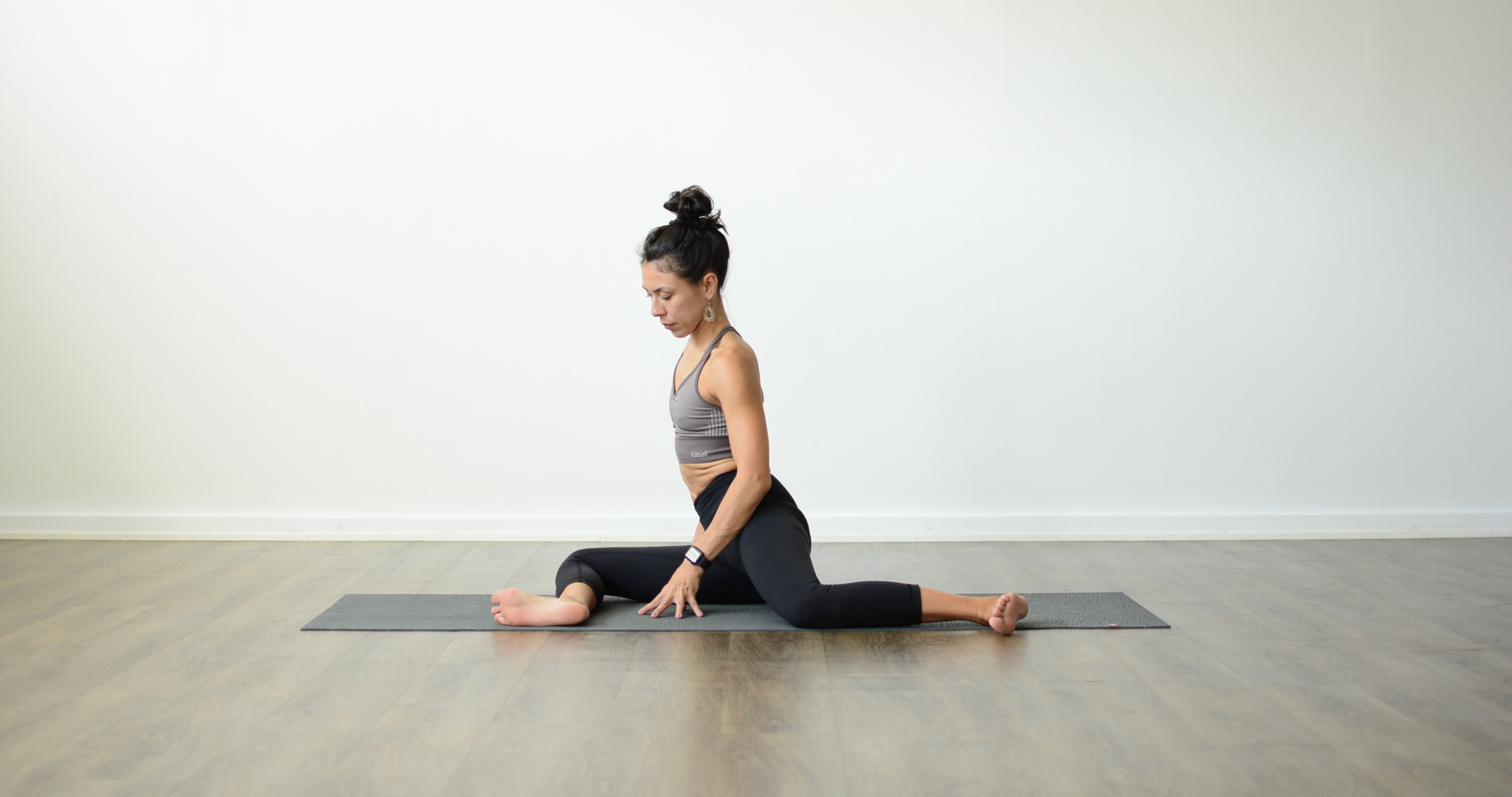
Running builds your hips in one direction. Yoga rebuilds the other two.
Every stride moves your leg forward and back. That is the sagittal plane, and after thousands of steps in a session, your body has been trained hard in exactly one direction. Hip flexors pull, glutes extend, hamstrings absorb force. All of it pointing straight ahead.
The other two planes get nothing.
Side-to-side movement, lifting the leg out and holding the pelvis level when you land on one foot, lives in the frontal plane. Rotation, the quiet twisting the hip does to keep you tracking straight, lives in the transverse plane. Running suppresses both. Not because running is bad for you, because it is efficient. The body feeds energy into the pattern it needs and quiets the muscles it does not. The deep hip rotators and the muscles that move the leg sideways stop being asked to do anything, shorten, and lose their say.
When runners say their hips feel tight, this is usually what they are describing. Not a muscle that has been worked hard and needs to lengthen. A muscle that has been ignored and has stopped pulling its weight. Foam rolling the IT band and stretching the hip flexors in a standing lunge does something, but it works the sagittal plane again. You are addressing the problem in the same direction that caused it.
What loading the other planes looks like
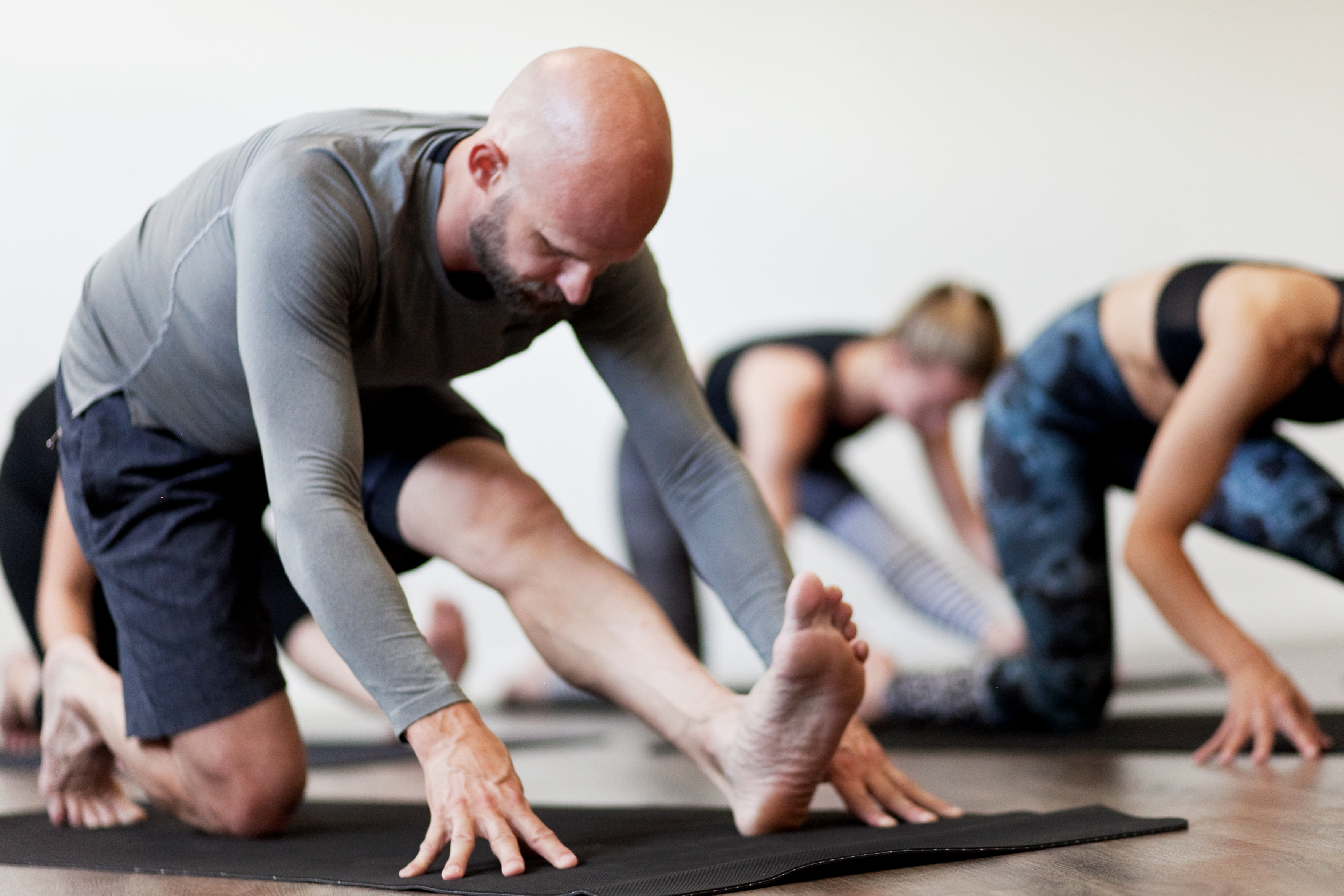
Yoga puts the hip into external rotation, abduction, and end-range positions that running never visits, and it does it under load. This is not passive stretching. Hold a deep hip shape for 90 seconds under your own bodyweight, and the muscles that own that shape are working the whole time to keep you there.
Pigeon is the clearest case. The front leg is externally rotated, and the hip is driven into flexion at the same time, which puts the deep rotators under a sustained pull they have not felt in months. Most runners are badly undertrained, and the first few holds feel like pressure from the inside rather than a stretch from the outside. That pressure is the rotators waking up. Two minutes a side, after a long run or the morning after. Not before a run: these muscles need to be recruited after the work, not switched off before it.
A low lunge with the back knee down works the other side of the joint. The trailing hip flexor is taken into end-range length under the weight of the body. The psoas spends most of a runner's day shortened, and the hours of sitting between runs shorten it further. The lunge reverses that. Tuck the tailbone slightly, and the load climbs. Sixty to ninety seconds a side, and a folded blanket under the back knee if the front of the hip lights up early.
The outer hip and the IT line
Figure-four on your back, one ankle crossed over the opposite thigh, hits the outer hip from a different angle than any standing drill. For runners who feel it on the outside of the knee, this shape often finds the real source: the hip is not rotating and abducting well, so the IT band and lateral quad cover for it under load. Two to three minutes a side.
Cow-face legs go deeper into the same ground, one hip in internal rotation, one in external, both loaded. Most runners cannot stack the knees cleanly at first, and a block under the lifted hip is the correct use of the shape, not a sign you are behind. Half-split addresses the hamstrings, which tug on the pelvis when they are short and quietly shorten your stride. Hinge from the hip, not the lower back, so you feel it high near the sitting bone. A block under the hands fixes the hinge instantly.
Where it fits in the week
This belongs after your long run or the morning after, when the tissue is warm, and the training is already banked. Twenty to thirty minutes, one or two days a week, is enough to start closing the frontal and transverse gaps that forward-only running builds. If you follow a structured plan, the Movement Rebels half marathon training plan incorporates this kind of mobility into the weekly load rather than leaving it optional. It should not be optional. It is part of the training.
After four to six weeks, the change is specific. The hip moves in the first half of the stride, rather than the pelvis hiking to cover a stuck joint. The wobble at the knee on single-leg landings gets smaller. And pigeon, which felt like a closed fist in week one, settles into a manageable ache the body accepts rather than braces against.
That last one is the tell. It means the deep rotators are doing their job again.