What Is Hot Yoga? Bikram, Moksha, Baptiste, CorePower and Barkan Compared

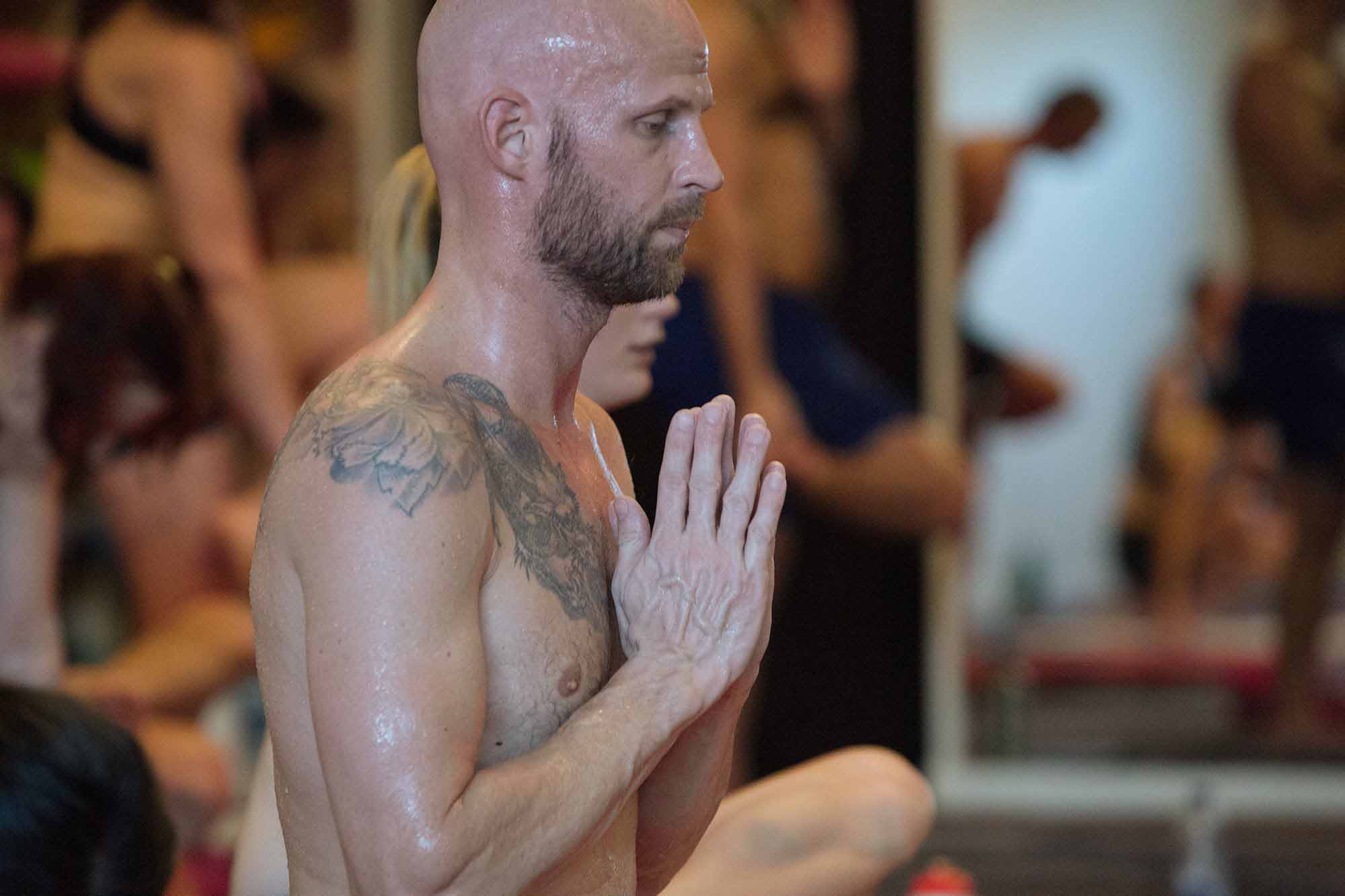
Hot yoga is any yoga class taught in a heated room, usually somewhere between 32 and 41°C (90-105°F), often with added humidity. The best-known styles are Bikram, with a fixed series of 26 postures at 40°C, and the heated vinyasa styles such as Baptiste Power Yoga, Moksha (Modo) Yoga, CorePower and the Barkan Method. They differ in three ways: how hot the room is, whether the sequence is fixed or changes from class to class, and how fast you move.
Here is how the main styles compare, where each one comes from, and what the heat does and does not do for you.
The main hot yoga styles at a glance
| Style | Room | Sequence | Pace |
|---|---|---|---|
| Bikram (Hot 26) | 40°C (105°F), 40% humidity | Fixed: 26 postures, 2 breathing exercises | Slow, held postures, 90 minutes |
| Barkan Method | 35-38°C (95-100°F) | Hot 26 base plus flow classes | Slow to moderate |
| Moksha / Modo | Around 39°C (103°F) | A set series, with room for variation | Moderate, 60-90 minutes |
| Baptiste Power Yoga | 32-35°C (90-95°F) | Changes, follows a pattern | Flowing vinyasa |
| CorePower | From unheated up to 40°C, by class type | Depends on the class | Moderate to fast |
Temperatures vary between studios, so treat these as typical numbers and ask your studio.
Bikram yoga
Bikram is the style most people mean when they say hot yoga. The room is heated to 40°C (105°F) with about 40% humidity. Every class is the same 90 minutes: 26 postures and two breathing exercises, in the same order, taught from a spoken script.
Bikram Choudhury put the series together from the Hatha yoga he learned in Calcutta under Bishnu Ghosh, the younger brother of Paramahansa Yogananda. He moved to the United States in the early 1970s and built a chain of studios on it. Technically it is a form of Hatha yoga: postures and breath, no flowing transitions.
A class opens with Standing Deep Breathing (Pranayama) and closes with Kapalabhati, the skull shining breath. In between you work through a standing series, with poses such as Standing Head to Knee, Standing Bow, Triangle and Tree, and a floor series with Cobra, Locust, Camel and Pavanamuktasana (Wind-Removing Pose). There are no headstands or other inversions. Breathing is through the nose. Our guide to the 26 Bikram yoga poses goes through each one, and for experienced students there is the longer Bikram advanced series of 84 postures.

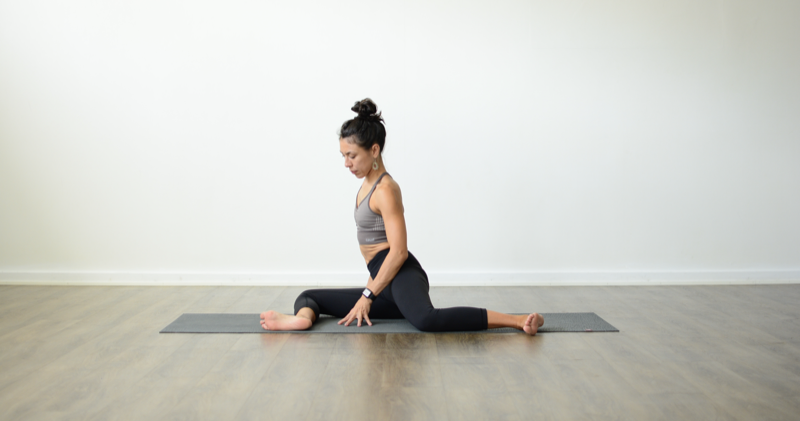
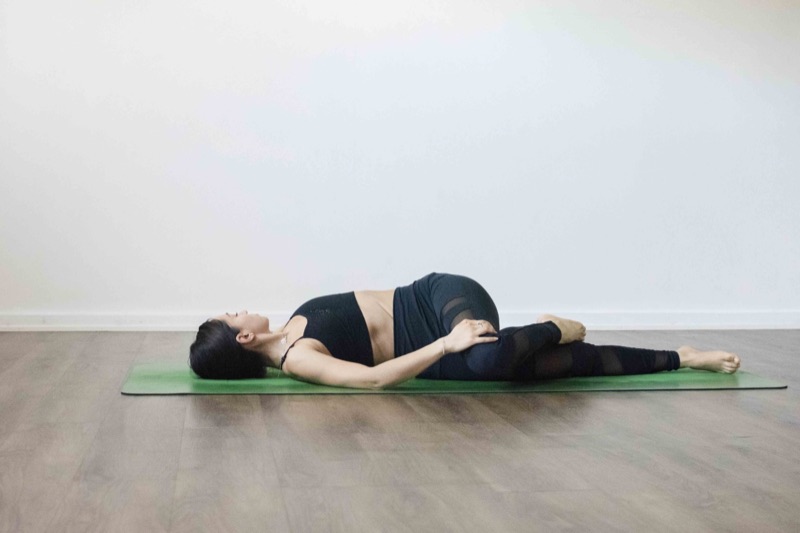
Wind-Removing Pose, from the floor series of the Bikram sequence.
You will often see the same class sold as Hot 26, 26+2 or Original Hot Yoga. There are two reasons. In 2015 a US appeals court ruled that a sequence of yoga poses cannot be protected by copyright, so any studio can teach it. And many studios dropped the Bikram name after Choudhury faced several lawsuits alleging sexual harassment and assault, lost a 2016 case brought by his former legal adviser, and left the United States. The postures did not change. The name did.
The fixed sequence is the draw. You know what is coming, so you can measure your own progress class by class. It is also the complaint: some students find the same 26 postures every time repetitive, and the classic script leaves little room for a teacher to adapt.
The Barkan Method
Jimmy Barkan taught Bikram yoga for more than 20 years and was one of its most senior teachers. He broke away and founded the Barkan Method of Hot Yoga in Fort Lauderdale, Florida, in the early 2000s. The room is a little cooler, around 35-38°C (95-100°F).
The base is the familiar series of 26 postures, taught with more freedom than the Bikram script allows. Teachers give variations, and the method adds heated flow classes with vinyasa-style transitions. It suits people who like the structure of Bikram but want a teacher who adjusts the class to the room in front of them. Michèle Pernetta took a similar path in London, and the Fierce Grace Classic sequence keeps the backbone of the Bikram series while adding core work and hip openers.
Moksha Yoga (Modo Yoga)
Ted Grand and Jessica Robertson founded Moksha Yoga in Toronto in 2004. Outside Canada the same style runs under the name Modo Yoga. The room is kept around 39°C (103°F).
Moksha works from a set series of postures, but it is a framework, not a script. Teachers can change the order, the timing and the class type, and studios run 60, 75 and 90-minute classes plus flow classes. A typical class starts lying down in Savasana (Corpse Pose), moves into standing postures, rests again, works on the floor and ends in Savasana. Many students find the tone lighter and less strict than a traditional Bikram class, though that depends on the teacher and the studio.
The studios also make a point of the environment: green building materials and a community focus are part of the brand. You can find a Modo or Moksha studio on their site.
Baptiste Power Yoga
Baron Baptiste grew up in yoga. His parents, Walt and Magana Baptiste, opened one of the first yoga studios in San Francisco in the 1950s. As a young man he studied with B.K.S. Iyengar and T.K.V. Desikachar, both from the Krishnamacharya lineage, and he also practised Bikram. In the 1990s he put these together into Baptiste Power Vinyasa Yoga, taught in rooms heated to 32-35°C (90-95°F).
The sequence changes, but classes follow a pattern: rounds of Sun Salutations, standing flows, then hip openers, backbends and core work. The method is taught around five pillars:
- Breath. Ujjayi, the victorious breath, slow and audible through the nose, kept steady in hard poses.
- Heat. A warm room, and the internal heat of the work itself.
- Flow. Each movement tied to an inhale or an exhale, as in vinyasa flow.
- Gaze. Drishti, a soft fixed gaze on a point that does not move. Unlike Ashtanga, Baptiste does not prescribe a gaze point for each pose.
- Core stabilisation. A light draw of the navel toward the spine through the whole practice. Baptiste teachers sometimes call it Uddiyana, but it is much gentler than the classical Uddiyana Bandha.
Expect to move fast and sweat a lot. It suits people who already like a strong vinyasa class.
CorePower Yoga
CorePower is a studio chain, not a lineage. Trevor Tice opened the first studio in Denver in 2002, and it has since grown into one of the largest yoga chains in the United States. An older version of this article credited the name to Ashtanga teacher Beryl Bender Birch. That was wrong: she helped coin the term power yoga in the 1990s, a vigorous style drawn from Ashtanga yoga, but she had nothing to do with CorePower.
What you get depends on the class type:
- C1: an introductory flow in a warm room, where most beginners start.
- C2: a faster heated vinyasa class for students who know the basic poses.
- Hot Power Fusion: a set series inspired by the 26 Bikram postures, in the hottest room.
- Yoga Sculpt: a heated class that mixes yoga with hand weights and cardio intervals.
Class names and temperatures change over time, so check the current schedule at your local studio.
Other classes in a hot room
Many studios heat more than yoga: hot vinyasa, hot Pilates, hot barre, sculpt and power fusion classes. Evolation Yoga, the studio chain that won the 2015 copyright case, teaches the 26 postures along with its own flow and yin classes. Some studios use infrared panels instead of forced hot air, which warm the body more than the air. If a studio says "hot", ask for the temperature. The difference between 30°C and 40°C is large.
What the heat does, and what it does not do
Your heart works harder. To shed heat, blood moves to your skin and your heart rate climbs. That is why a slow Bikram class can feel like a workout. Measured heart rates in studies of Bikram classes land at the level of a brisk walk, so the class is moderate exercise with a hot room around it.
You feel more flexible. Warm muscles and connective tissue feel more pliable, and many people go deeper into a stretch in the heat. That is also the risk. The heat can dull the warning signals that tell you when to stop, so you can overstretch a joint that is not ready. Go as far as you would at room temperature, then stay there.
The yoga does most of the work. A 2018 study from the University of Texas at Austin compared hot yoga, the same yoga at room temperature and a group who did no yoga. Blood vessel function improved in both yoga groups and not in the control group. That suggests the practice mattered more than the heat. Other research on hot yoga is small, and much of it has no room-temperature group to compare with, so claims that the heat itself adds health benefits are thin.
Sweat does not clean you out. Sweat is mostly water and salt. Its job is to cool you. Your liver and kidneys deal with waste, and they do it at any room temperature. The weight you lose in a hot class is water, and it comes back when you drink.
Who should skip or modify hot yoga
Hot yoga raises your core temperature, and a study sponsored by the American Council on Exercise measured core temperatures above 39°C in some students during a Bikram class. For most healthy people that is fine for 90 minutes. Talk to your doctor or midwife first, or choose a room-temperature class, if you:
- are pregnant, especially in the first trimester, or are not used to the heat and the practice
- have heart disease, low or high blood pressure, or have fainted before
- have multiple sclerosis or another condition that makes you sensitive to heat
- take medication that affects heart rate, fluid balance or sweating
- have an injury in a joint you tend to overstretch
Leave the posture and sit or lie down if you feel dizzy, nauseous, get a headache or stop sweating. Staying in the room lying down is always allowed.
How to prepare for your first hot class
- Drink through the day before. Hydrate over the 24 hours before class rather than gulping water in the last 10 minutes.
- Eat light. Leave 1-2 hours between a meal and class.
- Wear less. Shorts and a sports bra or a light top that does not get heavy when wet. Our guide on what to wear to hot yoga goes through it.
- Bring water and a towel. A towel on top of the mat stops you sliding.
- Tell the teacher about injuries or conditions before class, so they can show you variations.
- Refill the salt afterwards. A salty snack, a banana or coconut water helps replace what you sweated out.
If you want to learn the 26 postures before you walk into a heated room, start with Hot 26 Breakdown 1 with Lauren Matters, then try the 60-minute Hot 26 full class at home. For a shorter hot sequence, read our Hot 60 guide. For the full story, from Bishnu Ghosh in Kolkata to the 2015 copyright ruling, our sister studio has written the history of Bikram and hot yoga (in Swedish).
Frequently asked questions
Which is better, Bikram or vinyasa?
Neither is better. They train different things. Bikram holds each posture still, with the same sequence every class, which builds focus and lets you track progress. Hot vinyasa, such as Baptiste or CorePower C2, moves continuously from pose to pose and works more like cardio. Pick Bikram if you like structure, vinyasa if you like variety.
What are the 26 poses of hot yoga?
The Bikram series, also called Hot 26, has 26 postures and two breathing exercises. It begins with Standing Deep Breathing and Half Moon, runs through standing poses such as Awkward Pose, Eagle, Standing Bow and Triangle, then floor poses such as Cobra, Locust, Camel and Rabbit, and ends with a spinal twist and Kapalabhati breathing.
Who should not do hot yoga?
Check with your doctor or midwife first if you are pregnant, have heart disease or blood pressure problems, are sensitive to heat (for example with multiple sclerosis), have fainted before, or take medication that affects heart rate or fluid balance. A room-temperature class gives you the same postures without the heat.
Is hot yoga good for beginners?
Yes, if you go easy. Bikram was taught as a beginners' class, and most studios have an intro level. Drink well the day before, rest whenever you need to, and do not try to match the person next to you. Expect the first two or three classes to feel hard because of the heat, not the poses.
How hot is a hot yoga class?
Anywhere from about 30°C to 41°C (86-105°F). Bikram and Hot 26 classes are the hottest at 40°C (105°F) and 40% humidity. Heated vinyasa styles such as Baptiste run cooler, around 32-35°C (90-95°F).
Is Bikram yoga the same as hot yoga?
Bikram is one kind of hot yoga. Hot yoga is the umbrella term for any class in a heated room. Many studios now teach the Bikram sequence under names such as Hot 26 or 26+2.
Is Moksha yoga the same as Modo yoga?
Yes. Moksha Yoga was founded in Toronto in 2004 and still uses that name in Canada. Outside Canada the same style and studios run under the name Modo Yoga.
Does hot yoga burn more calories than regular yoga?
A little, mostly because your heart rate is higher. Studies of Bikram classes put the effort at around the level of a brisk walk. Much of the weight you lose in a class is water, which comes back when you drink.