Ustrasana (Camel Pose): How to Do It Step by Step

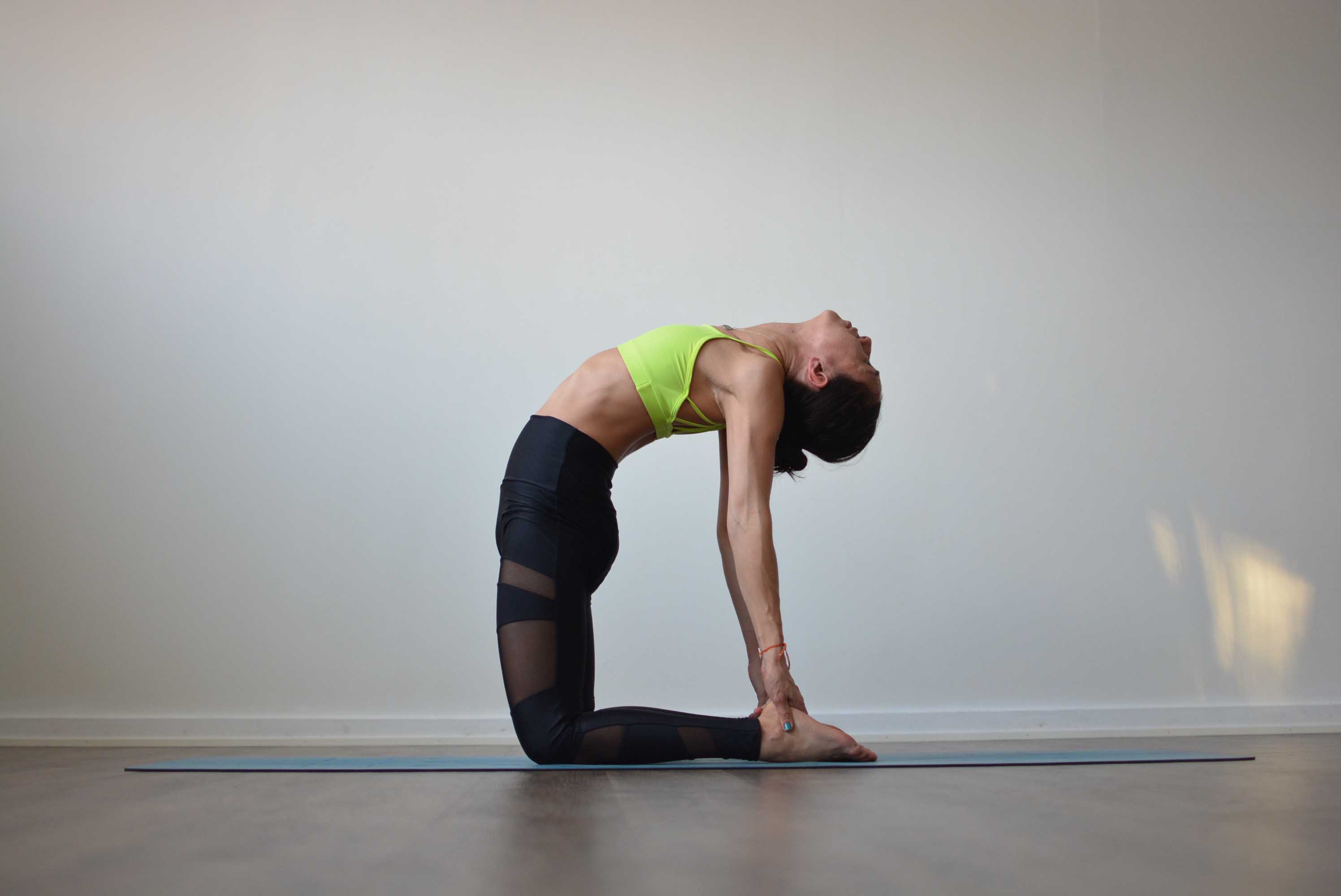
Ustrasana (Camel Pose) is a kneeling backbend in which you lift the chest, arch the upper back and reach your hands back to your heels, with the hips stacked over the knees. It stretches the whole front of the body, from the tops of the feet and the thighs to the hip flexors, belly, chest and throat, while the muscles along the back of the spine hold the arch. It is a common part of Hatha classes and one of the 26 postures of the Bikram sequence.
Pose type: kneeling backbend. Level: beginner to intermediate, with hands on the hips or on blocks to start. Props: a folded blanket under the knees, two blocks.
What Ustrasana means
The name joins two Sanskrit words: ushtra, camel, and asana, seat or posture. Say it oosh-TRAHS-anna. The name is usually explained by the shape: the lifted chest and curved back look like a camel's hump. That is a teacher's picture, and no old text spells it out.
How to do Ustrasana, step by step
Warm up first. A few rounds of Sun Salutations, a low lunge on each side and a couple of gentle backbends on your belly make the difference between a stiff Camel and a comfortable one.
- Kneel with your knees hip-width apart and your thighs vertical, so the hips sit straight above the knees. Put a folded blanket under the knees if they are sensitive. Start with the toes tucked under: it lifts the heels and brings them closer to your hands.
- Place your hands on the back of your pelvis, fingers pointing down. Press the tops of your thighs forward and lengthen your tailbone toward the floor, so the lower back stays long.
- Breathe in and lift your chest up toward the ceiling. Draw your shoulder blades together and down your back. Keep the chin slightly tucked for now.
- Breathe out and lean back from the upper back, keeping your hips over your knees. If you can go further, reach one hand back to the heel, then the other. If you cannot reach, keep your hands on your pelvis or rest them on blocks standing tall beside your ankles.
- Press your hips forward, lift the chest again, and let the head follow the arch of the spine. Release the head back only if your neck is comfortable. Otherwise keep the chin toward the chest.
- Stay for three to five slow breaths. In Bikram classes the pose is held twice, for about 20 seconds each time.
- To come out, bring your hands back to your pelvis one at a time, tuck the chin, and use your belly and thighs to lift the chest back up to kneeling. Lead with the chest and let the head come up last. Sit back on your heels and rest for a few breaths.
The effort in Camel is in the legs and the upper back. The lower back is the part that gives most easily, so keep asking the thighs to press forward and the chest to lift.
Mula Bandha and gaze
In the Ashtanga tradition Ustrasana belongs to the intermediate series, and it is practised with Mula Bandha, the root lock, and the gaze toward the tip of the nose. Many teachers let beginners look up at the ceiling or at the wall behind them. Our guide to drishti, the yoga gaze, explains the gaze points.
Benefits of Camel Pose
Camel is one of the few backbends where you can control the depth in small steps, from hands on the hips to hands on the heels. That makes it a good place to learn how a backbend feels.
- Front of the body: it stretches the quadriceps and the hip flexors, including the psoas, as the hips move forward over the knees. It also opens the chest and the front of the shoulders.
- Back of the body: the muscles along the spine and between the shoulder blades work to hold the chest up.
- Ankles and feet: with the feet flat, the tops of the feet and the front of the ankles stretch.
After a day of sitting, the hip flexors and the front of the chest are usually the tight parts, and Camel stretches both. Older articles say Ustrasana improves digestion, stimulates the organs or regulates the thyroid. Those claims come from the tradition and from repetition, and no study we know of backs them. What you can count on is a long stretch of the front of the body and work for the upper back.
Who should skip or modify Camel Pose
A deep backbend loads the lower back and the neck. Most trouble in Camel comes from dropping into the lower back and letting the head hang.
- Neck problems: keep the chin toward the chest the whole time, or rest the back of the head against a wall.
- Lower back pain: keep your hands on your pelvis and work on lifting the chest. Come out if you feel pinching in the lower back. A stretch in the front of the thighs and chest is what you want.
- Knee problems: use a thick blanket, or skip the pose if kneeling hurts.
- High or low blood pressure, or dizziness: keep the head up and come out slowly. Some people get dizzy on the way back up.
- Pregnancy: ask your midwife or doctor, and practise a shallow version with the hands on the pelvis.
For more on practising without injury, read our 10 tips to avoid yoga injuries.
Common mistakes
- Hips sliding back. When the hips move behind the knees, the pose turns into a sitting lean and the thighs stop stretching. Keep the thighs vertical.
- Bending only in the lower back. Lift the chest before you go back, and keep lifting it while you are there.
- Throwing the head back first. The head is the last part to go back and the last to come up.
- Reaching for the heels too early. If you have to twist or drop the hips to reach, use blocks or keep the hands on the pelvis.
- Holding the breath. Breathe slowly through the nose. If you cannot, you have gone too far.
- Coming up with the head first. It strains the neck. Tuck the chin and lift with the chest.
Preparatory poses
Camel needs open hip flexors, an upper back that can arch, and a strong back body. These poses prepare all three:
- Anjaneyasana (Low Lunge): the hip flexors and front of the thigh, one side at a time.
- Bhujangasana (Cobra Pose): a gentle backbend on the belly that teaches you to lift the chest.
- Salabhasana (Locust Pose): strengthens the muscles along the spine that hold the arch.
- Setu Bandha Sarvangasana (Bridge Pose): hips forward and chest open, with the head and neck supported by the floor.
- Supta Vajrasana (Fixed Firm Pose): stretches the thighs and the fronts of the ankles.
If your hip flexors are the limit, our article on the hip flexors, the psoas and yoga explains what they do and how to stretch them.
Follow-up poses
- Balasana (Child's Pose): a soft forward fold that rounds the back after the arch.
- Sasangasana (Rabbit Pose): the pose that follows Camel in the Bikram sequence, a rounded forward bend with the head on the floor.
- Dhanurasana (Bow Pose) and Urdhva Dhanurasana (Wheel Pose): deeper backbends for when Camel feels steady.
Sit on your heels or lie on your back for a few breaths before the next pose. Some people feel light-headed after a deep backbend.
Ustrasana variations
- Hands on the pelvis: the starting version. All the work goes into lifting the chest.
- Hands on blocks: blocks beside the ankles bring the floor closer.
- Toes tucked: lifts the heels so they are easier to reach.
- At the wall: kneel with the thighs and hips against a wall and press them into it as you lean back. The wall keeps the hips from sliding back.
- One arm reaching up: one hand on the heel, the other arm stretched up and back, then change sides.
- Knees together: harder, because the legs stay together while you arch. For experienced practitioners.
- Full Camel: the head comes down toward the feet and the hands hold the ankles or the feet. A deep backbend that takes years of practice for most people.
For a guided practice, the class How to Camel Pose takes you into Ustrasana step by step with warm-ups for the shoulders and back, and How to Train Your Pet Camel is a 30-minute Vinyasa flow around Camel and its variations, with blocks.
Frequently asked questions
What is Ustrasana and what are its benefits?
Ustrasana, or Camel Pose, is a kneeling backbend with the hips over the knees and the hands on the heels or the pelvis. It stretches the thighs, hip flexors, belly and chest, and it works the muscles along the spine and between the shoulder blades.
Why is it called Ustrasana?
Ushtra means camel in Sanskrit and asana means posture. The usual explanation is the shape: the arched back and lifted chest look like a camel's hump.
Is Camel Pose good for beginners?
Yes, in its easier forms. Keep your hands on your pelvis or on blocks, lift the chest, and keep the chin toward the chest. Reaching for the heels can wait until the pose feels comfortable.
How long should you hold Camel Pose?
Three to five slow breaths is enough for most people. In the Bikram sequence it is held twice, for about 20 seconds each time. Come out as soon as you cannot breathe calmly or feel pain in the lower back or neck.
Why do I feel dizzy or emotional after Camel Pose?
Dizziness is common when the head goes back and then comes up quickly, as blood pressure adjusts to the change. Come up slowly, head last, and rest on your heels. Some people also feel emotional in deep backbends. Teachers often talk about this, but there is no solid research on why.
What should I do after Camel Pose?
Sit on your heels and rest, then fold forward into Child's Pose or Rabbit Pose to round the back gently. Avoid jumping straight into a deep forward bend.