Bikram Advanced Series (The 84): All Postures in Order


The Bikram advanced series, often called the 84 or the advanced class, is a long fixed sequence of Hatha postures from the Bishnu Ghosh lineage that Bikram Choudhury taught to experienced students and teachers. It covers standing balances, lotus work, deep backbends, legs behind the head, arm balances, headstands and handstands, and ends with breathing and abdominal control. A full class takes about two to three hours, usually in a room heated like a regular Bikram class.
Class type: hot Hatha, fixed sequence. Level: advanced. Most people who take it have practised the 26-posture beginning class for years. Props: a mat, a towel and water.
What the advanced series is
Bikram yoga has two classes. The one most people know is the beginning class: 26 postures and two breathing exercises in 90 minutes, often called 26+2. The second is the advanced class. It starts with many of the same standing postures, then keeps going into poses the beginning class leaves out: full lotus and its variations, Peacock, Scorpion, one-leg-behind-the-head, handstand.
The number 84 is a name more than a count. The Hatha Yoga Pradipika says that Shiva taught 84 asanas, and later texts repeat the number. Lists of the advanced class, including the one below, do not come out at exactly 84 postures, because warm-ups, variations and rests are counted differently from school to school.
If you have been to a Bikram studio, you may have seen a poster of Tony Sanchez demonstrating the advanced postures. Sanchez studied with Bikram in the 1970s and later taught the series in his own teacher trainings.
Where it comes from
Bikram Choudhury learned his yoga in Calcutta (Kolkata) at the college of Bishnu Ghosh, the younger brother of Paramahansa Yogananda. Ghosh taught a physical Hatha system that mixed postures with strength training and therapy work. Both of Bikram's classes draw on that school.

Bishnu Ghosh and Bikram Choudhury
How much of the sequence is Bikram's own work is disputed. Bikram presented both classes as his. Teachers from the Ghosh family and its lineage say the postures and much of the order were taught at Ghosh's college before him. If you want to study the lineage from that side, Ghosh Yoga in Chicago, run by Ida Jo Pajunen and Scott Lamps, trains teachers and has published books on the beginning, intermediate and advanced postures (ghoshyoga.org).
For how the heated styles grew out of this, and the court cases that followed Bikram Choudhury, read our guide to the types of hot yoga.
The advanced series in order
This is the order as it was taught in the class these notes come from. Names and spellings vary between schools, and a senior teacher will add or skip postures depending on the room. Savasana (Corpse Pose) comes between most of the series.
Opening
- Pranayama: Standing Deep Breathing, 20 repetitions.
- Virabhadrasana: Salute to the gods and goddesses, an 8-count series, done twice.
- Surya Namaskar: Sun Salutation, an 8-count series.
Half moon series
- Parsva Ardha Chandrasana: Lateral Half Moon.
- Ardha Chandrasana: Half Moon backbend.
- Pada Hastasana: Hands to Feet.
- Trikonasana: Triangle.
- Dandayamana Bibhaktapada Janushirasana: Standing Separate Leg Head to Knee, finished with no hands.
- Utkatasana: Awkward Pose, three parts.
- Garudasana: Eagle.
- Dandayamana Janushirasana: Standing Head to Knee. Finish by releasing the foot with the arms straight ahead, then take the hands behind the back in reverse prayer.
- Dandayamana Dhanurasana: Standing Bow Pulling.
- Tuladandasana: Balancing Stick.
- Bibhakta Hasta Tuladandasana: Separate Hands Balancing Stick.
- Dandayamana Bibhaktapada Paschimotthanasana: Standing Separate Leg Stretching. Hold the heels, then hands in prayer, then slide down into side splits.
- Guillotine: a warm-up, then the pose.
- Tadasana: Tree. Bikram's name for what most schools call Vrksasana.
- Padangusthasana: Toe Stand.
- Bamanasana: Short Man Pose, with a warm-up if needed.
- Angusthasana: Finger Stand.
- Kakasana: Crow.
- Bakasana: Crane.
- Pranasana: Life Pose.
Lotus series
Warm up the hips first: rock the baby, then three rounds of 20 leg circles.
- Sukhasana: Easy Pose.
- Samasana: Plain Pose, left foot over, right under.
- Siddhasana: Accomplished Pose, heel to heel.
- Bhadrasana: Gentle Pose. Forehead down to the feet, then hands to the knees with a straight spine.
- Swastikasana: Auspicious Pose, right and left.
- Ardha Padmasana: Half Lotus, right leg first.
- Padmasana: Lotus.
- Utthita Padmasana: Lifted Lotus, balancing on the fingers.
- Baddha Padmasana: Bound Lotus.
- Tulangalasana: Lotus in an L.
- Garbhasana: Fetal Pose.
- Matsyasana: Fish.
- Makarasana: Spider Pose, hands in reverse prayer.
- Parbatasana: Mountain Pose, in lotus.
- Kukkutasana: Rooster.
- Pavanamuktasana: Wind Removing Pose.
Cobra series
- Bhujangasana: Cobra.
- Salabhasana: Locust.
- Poorna Salabhasana: Full Locust.
- Dhanurasana: Bow.
Fixed firm series
- Supta Vajrasana: Fixed Firm.
- Ardha Kurmasana: Half Tortoise.
- Ustrasana: Camel.
- Sasangasana: Rabbit.
- Janushirasana: Head to Knee.
- Paschimotthanasana: Stretching Pose.
- Bibhakta Pada Paschimotthanasana: Separate Leg Stretching, a wide straddle.
- Mandukasana: Frog.
- Utthita Paschimotthanasana: Upward Stretching.
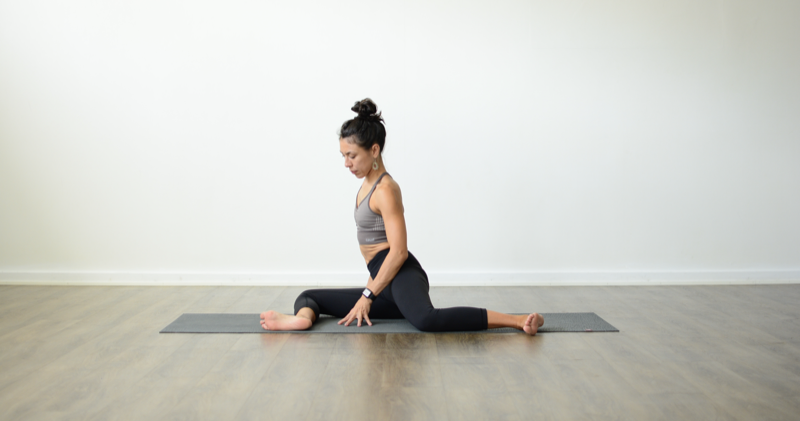
- Poorna Bibhaktapada Janushirasana: Full Separate Leg Head to Knee, the splits.
- Eka Pada Rajakapotasana: Pigeon, left knee bent first, then right.
- Dandayamana Poorna Janushirasana: Full Standing Head to Knee, a standing split, standing on the left leg first.
- Poorna Dandayamana Dhanurasana: Full Standing Bow.
Double-sided series
- Akarna Dhanurasana: Archer Pose, right leg across first.
- Chatushkonasana: Four Angle Pose, left knee bent across first.
- Gomukhasana: Cow Face.
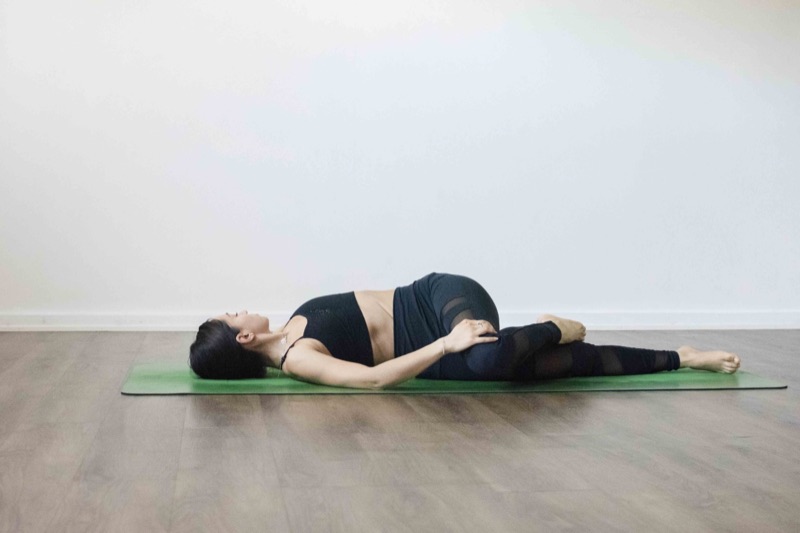
- Ardha Matsyendrasana: Spine Twist, the regular version and then the full version, right and left.
Bow leg series
- Eka Pada Gokhilasana: Bow Leg Pose, right and left.
- Dwi Pada Gokhilasana: Both Legs Bow Leg Pose.
- Gokhilasana Mayurasana: Bow Leg in Peacock.
- Gokhilasana Parbatasana: Bow Leg in Mountain.
Tortoise series
Warm up each leg first, right and left.
- Eka Pada Sirasana: One Leg Behind the Head, right and left.
- Dwi Pada Sirasana: Both Legs Behind the Head.
- Utthita Kurmasana: Upward Tortoise, two versions.
- Kurmasana: Tortoise.
- Yoga Nidrasana: Yogi Sleep Pose.
- Om Pose and Goodbye Pose, right and left.
Plough series
- Uttanapadasana: Leg raises, right, left and both, then legs over the head five times to warm up.
- Halasana: Plough.
- Karnapidasana: Knees to Ears.
- Sarvangasana: Shoulder Stand.
- Urdhva Sarvangasana: Lotus in Shoulder Stand.
- Baddha Sarvangasana: Folded lotus in Shoulder Stand.
Full series
- Poorna Bhujangasana: Full Cobra.
- Poorna Dhanurasana: Full Bow.
- Poorna Ustrasana: Full Camel.
- Setu Bandha: Bridge.
- Chakrasana: Wheel, with any of the variations: from standing, on one leg and so on.
Peacock series
- Mayurasana: Peacock.
- Baddha Mayurasana: Lotus Peacock.
- Eka Pada Mayurasana: One Leg Peacock.
- Eka Hasta Mayurasana: One Arm Peacock.
Headstand series
- Ardha Sirsasana: Half Headstand.
- Sirsasana: Headstand.
- Urdhva Sirsasana: Lotus in Headstand.
- Baddha Sirsasana: Folded lotus in Headstand.
Tiger series
- Baghrasana: Tiger Pose, an arm balance.
- Baghrasana Vrischikasana: Scorpion in Tiger.
- Baghrasana with folded lotus.
- Likarasana.
Handstand series
- Hastasana: Handstand.
- Urdhva Hastasana: Lotus in Handstand.
- Folded lotus handstand, sometimes taught as Kukkutasana.
- Eka Hasta Hastasana: One Hand Handstand.
- Vrischika Hastasana: Scorpion Handstand.
- Brikkhasana: Palm Tree, a one-arm handstand.
Closing
- Simhasana: Lion.
- Nauli: abdominal control.
- Kapalabhati: Blowing in Firm, 300 breaths.
- Savasana: Dead Body Pose. Class finished.
Mudras, bandhas, kriyas and pranayama
The old Ghosh-lineage notes list practices that go alongside the postures. They come from the Hatha texts and are taught person to person, by a teacher who watches you do them. We name them here so you recognise them. This is no substitute for that teacher.
- Mudras: Viparita Karani Mudra (done upside down), Ashvini Mudra (a contraction of the anal sphincter), Yoga Mudra (on a count of six, down and up) and Maha Mudra (left leg and right, a count of six). For the hand mudras most yoga classes use, see eight yoga mudras.
- Bandhas: Uddiyana Bandha, drawing the belly in and up on an empty breath, then Nauli: the central abdominal muscles isolated in the middle, on the right (Dakshina), on the left (Vama), and rolled from side to side (Nauli Chalana).
- Kriyas: the dhauti practices, washing the stomach with water, with a cloth, and washing the nose and throat. These carry real risks and are outside what a class or a blog post should teach.
- Pranayama: Kapalabhati, and Sitali (a cooling breath) sitting in Gomukhasana.
Where sources disagree
- Is it 84 postures? Rarely exactly. The number points back to the Hatha texts: the Hatha Yoga Pradipika credits Shiva with 84 asanas, and the Gheranda Samhita says there are as many asanas as living beings and names 84 as the best. Most lists of the advanced class land somewhere near that figure once warm-ups and variations are counted.
- Whose sequence is it? Bikram taught it as his advanced class. The Ghosh lineage treats it as the Ghosh college's postures, which Bikram learned and put in order. Both accounts agree that the poses are older than the hot room.
- Does it need the heat? Bikram studios run it hot, usually around 40°C (105°F). Some Ghosh-lineage teachers teach the same postures in a warm room. Heat makes the muscles feel looser, and it also raises your heart rate and core temperature over two or three hours. Drink before class and leave the room if you feel dizzy.
- Is it safe for your back and knees? The series contains some of the most extreme positions in Hatha yoga: full lotus variations, both legs behind the head, full backbends from standing. Research on the advanced series itself is close to none. Most teachers agree that the risk comes from forcing these shapes before the hips, spine and shoulders are ready, and the heat can make you feel more open than you are.
How to build up to the advanced class
Most students start with the beginning class for a long time, often years, then take a senior teacher's intermediate class, a shorter selection from the 84. Build the pieces the advanced class relies on outside it:
- Hips that allow Lotus without pain in the knees. If your knee hurts in lotus, stop there.
- Backbends that come from the upper back as well as the lower back. The Advanced Backbends program works on that.
- A steady Headstand and Crow before you try Peacock, Scorpion or Handstand.
See the class
Advanced class in Australia.
Advanced class in Spain.
To learn the base the advanced class starts from, practise the 26 postures one by one with Lauren Matters in the Hot 26 Breakdown collection.
Frequently asked questions
What is advanced Bikram yoga?
Advanced Bikram yoga is the long fixed sequence Bikram Choudhury taught to experienced students, often called the 84. It adds lotus variations, deep backbends, legs behind the head, arm balances, headstands and handstands to the standing postures of the beginning class, and takes about two to three hours.
How many poses are in the Bikram advanced series?
The series is named after the traditional number 84 from the Hatha texts, but written lists rarely count exactly 84. Depending on how warm-ups, variations and rests are counted, most versions land close to that number.
What is intermediate Bikram yoga?
An intermediate class is a shorter selection from the advanced series, usually 90 minutes to two hours. Senior teachers put it together to bridge the gap between the 26-posture beginning class and the full advanced class, so the content varies from studio to studio.
How long does the advanced class take?
Usually two to three hours, and some classes run shorter at around 90 minutes. It depends on how many variations the teacher includes and how long each posture is held.
Can a beginner do the advanced series?
No. Several postures, such as both legs behind the head, Peacock and one-arm handstand, need years of preparation. Start with the 26-posture beginning class, and ask a senior teacher when you are ready for an intermediate class.
Is Bikram yoga bad for your back?
The beginning class has deep backbends that many people practise without trouble, and the advanced class goes much further. Problems come from forcing a backbend or a lotus that your body is not ready for, often helped along by the heat. Go at the pace of your least flexible part, and see a doctor first if you have a back injury.
Why do some people say Bikram yoga is bad for you?
Two reasons come up. The hot room raises core temperature and heart rate, which is a risk for people with heart problems, low blood pressure or pregnancy. And many studios dropped the Bikram name after the lawsuits against Bikram Choudhury. The postures themselves are ordinary Hatha postures.