Kapalabhati (Skull Shining Breath): How to Do It Step by Step

Kapalabhati (Skull Shining Breath) is a yoga breathing technique of short, sharp exhales through the nose, each one driven by a quick pull of the lower belly, with a passive inhale in between. You do it in rounds of 20-60 breaths, with rests. In hatha yoga it is classed as a purification practice (kriya) and is often taught alongside the pranayama breathing practices, as a warm-up before slower breathing or meditation.
Type: seated breathing practice. Level: beginner to intermediate, start slowly. Time: 3 rounds of 20-30 breaths, about 5 minutes with rests. Props: a cushion or a chair, a tissue for the nose.
What does Kapalabhati mean?
The name joins two Sanskrit words:
- Kapala (कपाल): skull, the head.
- Bhati (भाति): shining, light, bright.
So Kapalabhati is the "skull shining" breath. The image is of a clear, bright head, which is how many people feel after a few rounds. You will also see it spelled Kapalbhati, the Hindi spelling, and Kapal Bhati. They are the same practice.
The Hatha Yoga Pradipika, the 15th century manual of hatha yoga, lists Kapalabhati as one of the six purification techniques (shatkarmas), next to practices such as nasal rinsing and nauli, the rolling of the belly muscles. It describes rapid breathing in and out like the bellows of a blacksmith. So in the old texts it sits with the purification practices, not with the pranayamas. Most modern classes teach it as a breathing exercise, which is how you will meet it on the mat.
How to do Kapalabhati step by step
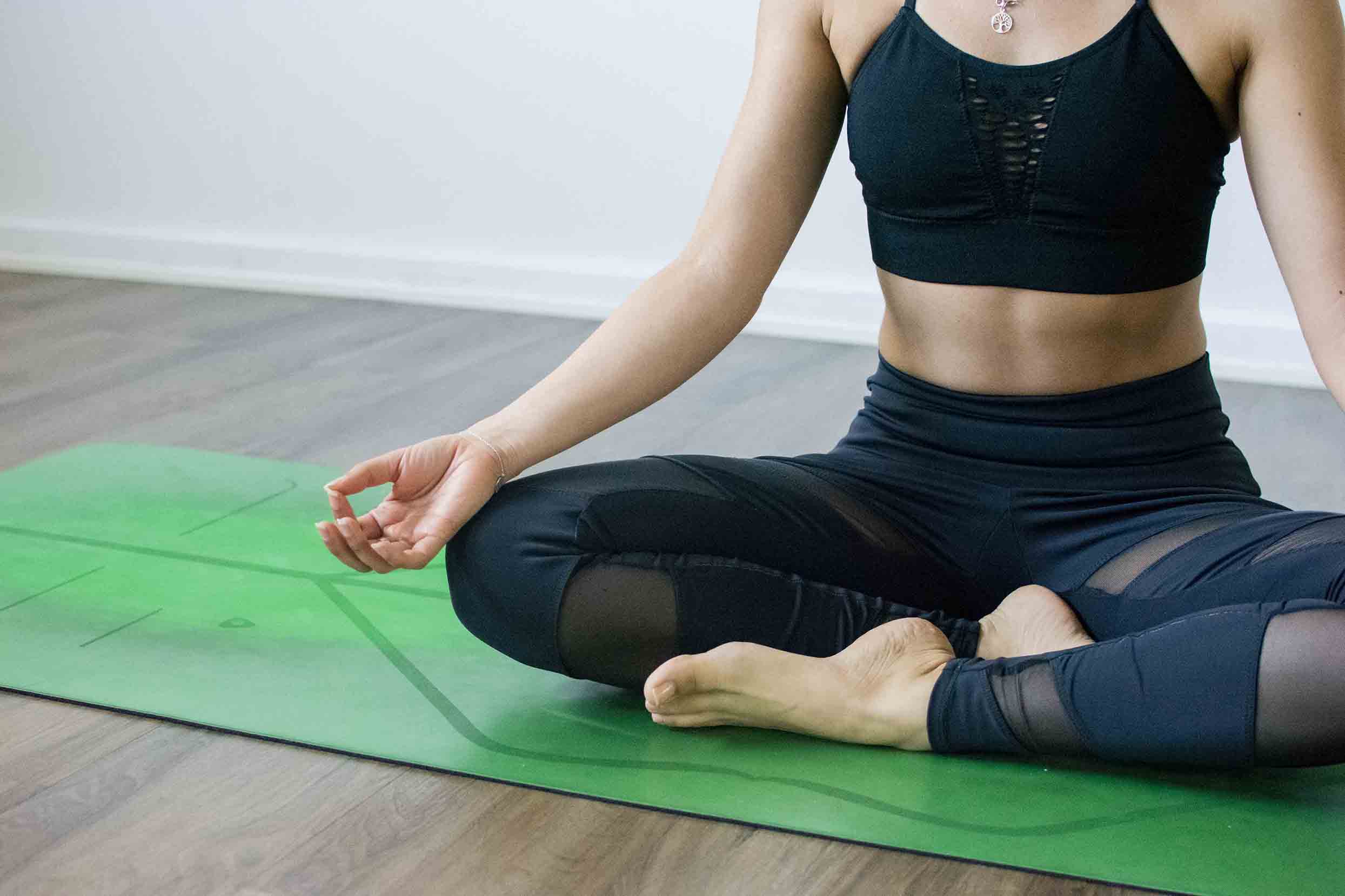
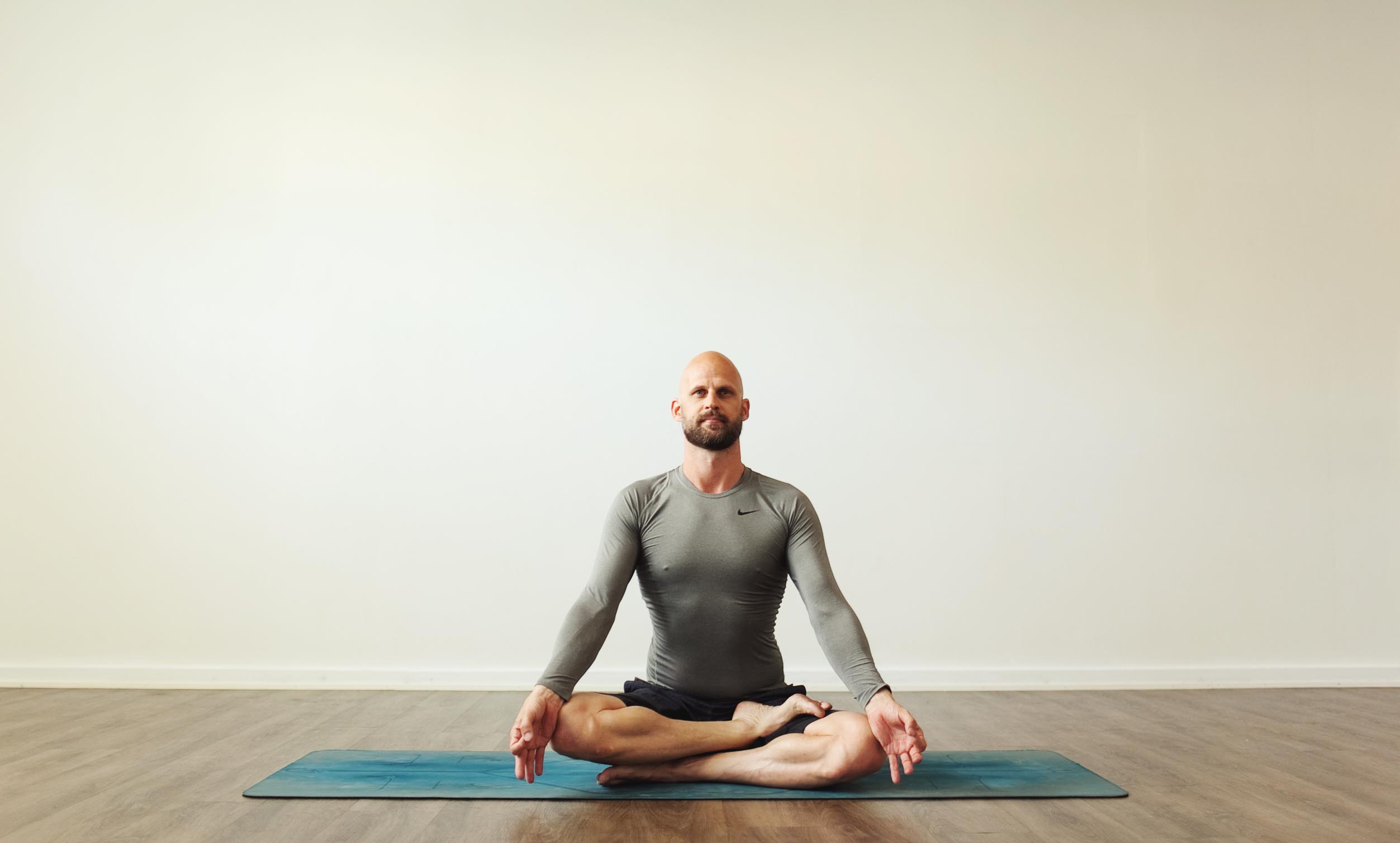
- Sit tall. Choose a seat where the spine stays upright without effort: Sukhasana (Easy Pose) on a cushion, kneeling on your heels, or a chair with both feet on the floor. Practise on an empty stomach, two to three hours after a meal.
- Clear the nose. Blow your nose first. All the breathing goes through the nostrils.
- Settle. Rest your hands on your knees, right hand on the right knee, left hand on the left. Take two or three slow breaths in and out through the nose.
- Breathe in halfway. Fill the lungs to a comfortable middle, not to the top.
- Snap the belly in. Pull the lower belly, below the navel, quickly in and up toward the spine. The air leaves through the nose in one short, audible puff.
- Let go. Release the belly. It springs back out and the air falls back in on its own. Do not suck the air in. The inhale is passive.
- Find a rhythm. Repeat at about one exhale per second for 20 breaths. Keep the chest, shoulders and face still. Only the lower belly moves.
- Finish with a long exhale. After the last pump, breathe out fully and slowly, then breathe normally.
- Rest. Sit for 30 seconds to a minute until the breath has settled. Notice how you feel.
- Repeat. Do 3 rounds. Over a few weeks you can add breaths per round and a little speed, as long as each exhale stays the same size.
If you would rather learn it with a teacher's voice in your ear, the 15-minute Kapalabhati tutorial with Guy Powiecki goes through the technique step by step.
How long and how fast?
Start small. 20 breaths a round, 3 rounds, at a pace of about one per second. That is enough for the first weeks. Experienced practitioners work up to 60-120 breaths a minute and rounds of a minute or more, but speed is the last thing to add. An even, clean exhale at a slow pace is worth more than a fast, ragged one.
The morning suits it best. Kapalabhati wakes you up, so many teachers advise against it close to bedtime. If you use it at night and still sleep well, you are the exception, not the rule.
What Kapalabhati does
It wakes you up. Fast breathing shifts the nervous system toward its alert side, the sympathetic branch. Small studies that measured heart rate variability during Kapalabhati found this shift. Most people feel warm, awake and clear-headed afterwards.
It trains the belly. Every exhale is a quick contraction of the deep abdominal muscles, repeated many times. You learn to move the lower belly on its own while the upper body stays quiet, the same control you need for Uddiyana Bandha and Mula Bandha (Root Lock).
It can make you light-headed. Fast breathing blows off carbon dioxide faster than the body makes it. That lowers the carbon dioxide in the blood for a while, which is the reason for tingling fingers or a light head. It is not "extra oxygen" reaching the brain. The feeling passes within a minute or two of normal breathing.
What the research says. The studies are few and small. Short-term studies report changes in heart rate, and some report faster reaction times or better attention after practice. Claims that Kapalabhati cures diabetes, cleans the brain or melts belly fat come from marketing and from traditional texts, not from research.
Who should skip or modify it
- Pregnancy: skip it. Forceful pumping of the belly does not belong in pregnancy.
- High blood pressure or heart disease: skip the fast version. Slow breathing such as Nadi Shodhana (Alternate Nostril Breathing) is a better choice.
- Epilepsy: skip it. Rapid breathing can lower the seizure threshold.
- Hernia, recent abdominal surgery, or a recent back injury: wait until you have recovered and your doctor agrees.
- Panic attacks or anxiety: the fast breath and the tingling can feel like the start of a panic attack. Bhramari Pranayama (Humming Bee Breath) calms instead.
- Menstruation: many traditional teachers advise against it during the period. Fewer, slower breaths or a break from the practice are the lighter options.
- A cold or blocked nose: wait until you can breathe freely.
- Never in water, in a car or standing up. If you get dizzy, you need to be sitting.
Common mistakes
- Sucking the air in. The inhale should happen by itself as the belly releases. An active, loud inhale turns the practice into something closer to Bhastrika.
- Moving the chest and shoulders. If your shoulders bounce, the work has moved up from the belly. Put one hand on the lower belly to feel where the movement comes from.
- Going too fast too soon. Speed makes the exhales uneven and brings on dizziness. Slow down until each exhale sounds the same.
- Starting on empty lungs. Begin with a half breath in. Pumping from empty lungs strains.
- Tensing the face. Keep the jaw soft and the forehead smooth. The nose makes the sound, not the face.
- Pushing through dizziness. Stop, breathe normally and do fewer breaths in the next round.
Kapalabhati, Bhastrika and Breath of Fire
Three names for fast breathing, and teachers use them differently. This is where the sources disagree.
Kapalabhati vs Bhastrika. In Kapalabhati the exhale is active and the inhale passive. Bhastrika Pranayama (Bellows Breath) is usually taught with an inhale as strong as the exhale, and a slow breath and a breath hold at the end of each round. The Hatha Yoga Pradipika uses the bellows image for both, which is one reason people mix them up. Learn Kapalabhati first. It is the groundwork for Bhastrika.
Kapalabhati vs Breath of Fire. In Kundalini yoga, Breath of Fire is fast breathing through the nose with the inhale and the exhale equal in strength and length. Some teachers use the two names for the same practice. Others, us included, keep them apart: in Kapalabhati the exhale leads and the inhale follows.
Nose or mouth. Most traditions breathe in and out through the nose. In Bikram and some hot yoga classes, Kapalabhati closes the class kneeling, with the exhales through the mouth. Both are taught. Nose breathing is the classical form and the one we teach.
Purification or breathing. The old texts call Kapalabhati a purification technique and say it removes disorders of mucus, kapha in Ayurvedic terms. The Gheranda Samhita even describes versions with water drawn in through the nose. Many modern writers turned the word "purification" into claims about flushing out waste and flooding the brain with oxygen. Read the old claims as tradition. What you can count on is a clear nose, an awake body and strong belly control.
After Kapalabhati
Kapalabhati works well as the first part of a breathing session. After a few rounds, the breath slows down easily. Go on with Ujjayi Pranayama (Victorious Breath), Nadi Shodhana or a few minutes of sitting still. When you are comfortable with both Kapalabhati and short breath holds, Kumbhaka Pranayama (Breath Retention) is the next step.
For a short morning practice, try Pick Me Up Kapalabhati, 10 minutes with Guy Powiecki, or learn it in week three of the eight-week Pranayama Program Level 1. All our breathing classes are under pranayama.
Frequently asked questions
What is the correct way to do Kapalbhati?
Sit tall on an empty stomach and breathe in halfway. Then pull the lower belly in sharply to push the air out through the nose, and let the belly release so the air falls back in by itself. Repeat about once per second for 20 breaths, finish with a long exhale and rest.
How long should I do Kapalbhati?
Beginners: 3 rounds of 20-30 breaths with a rest between rounds, about five minutes in all. Over weeks you can build to longer rounds. Popular advice to do it for 15-30 minutes a day is far more than most teachers recommend, and more is not better.
Who should not do Kapalabhati?
Skip it if you are pregnant, have high blood pressure, heart disease or epilepsy, have a hernia or recent abdominal surgery, or tend toward panic attacks. Many traditional teachers also advise against it during menstruation. When in doubt, choose a slow breathing practice instead.
What is Kapalbhati and its benefits?
Kapalabhati is fast breathing with sharp exhales from the belly and passive inhales. It makes you more alert, trains the deep abdominal muscles and clears the nose. The research on it is small, and bigger claims, such as weight loss or curing disease, are not supported.
Why do I feel dizzy after Kapalabhati?
Fast breathing lowers the carbon dioxide in your blood for a short while, which can cause a light head and tingling hands. Stop, breathe normally for a minute, and slow the pace or cut the number of breaths next time.
Is Kapalabhati the same as Breath of Fire?
Not quite. Kapalabhati has an active exhale and a passive inhale. Breath of Fire, from Kundalini yoga, keeps the inhale and exhale equal. Some teachers use the names for the same thing, so ask what your teacher means.
Can I do Kapalabhati at night?
You can, but it tends to wake you up, so most teachers place it in the morning. In the evening, a slow practice such as Nadi Shodhana or Bhramari is a better choice before sleep.
Practise it with a teacher
Over 600 online yoga classes and programs for $4.99 a month. Cancel any time.
Become a member