Kumbhaka Pranayama (Breath Retention): How to Do It Step by Step


Kumbhaka is the pause in the breath that pranayama trains on purpose: you breathe in, hold, and then breathe out, or breathe out, hold, and then breathe in. Holding after the inhale is antara kumbhaka. Holding after the exhale is bahya kumbhaka. Beginners start with a short hold after the inhale, a few seconds at a time, in a count such as 1-1-2: inhale for four, hold for four, exhale for eight.
What does kumbhaka mean?
The word comes from Sanskrit kumbha (कुम्भ), a pot or water jar. Kumbhaka is "like a pot". The image is the torso as a vessel: you fill it with the inhale, keep it closed, then empty it. The Hatha Yoga Pradipika, a 15th-century manual of Hatha Yoga, uses the word so often that for its author kumbhaka and pranayama are close to the same thing.
The other words you meet in a kumbhaka class:
- Puraka: inhalation, "filling".
- Rechaka: exhalation, "emptying".
- Antara (also antar or abhyantara): inner. Antara kumbhaka is the hold with full lungs.
- Bahya: outer. Bahya kumbhaka is the hold with empty lungs.
- Sahita: "together with". A hold you make on purpose, joined to an inhale or an exhale.
- Kevala: "alone" or "only". A pause that happens by itself, with no effort to hold.
The two main types
Antara kumbhaka, the hold after the inhale, is where everyone starts. The lungs are full, so the body has air to spare and the urge to breathe comes slowly. Most traditions teach it with Jalandhara Bandha, the throat lock: the chin drops toward the breastbone and keeps the breath in without a squeeze in the throat.
Bahya kumbhaka, the hold after the exhale, is harder. With empty lungs the urge to breathe arrives fast, and the lower belly draws in and up. Teachers add it later, often with Mula Bandha, the root lock, and Uddiyana Bandha.
How to do kumbhaka pranayama, step by step
Type: pranayama, breath retention. Level: 1-2, after you are at ease with slow, long exhales. Props: a cushion or a chair. Practise on an empty stomach.
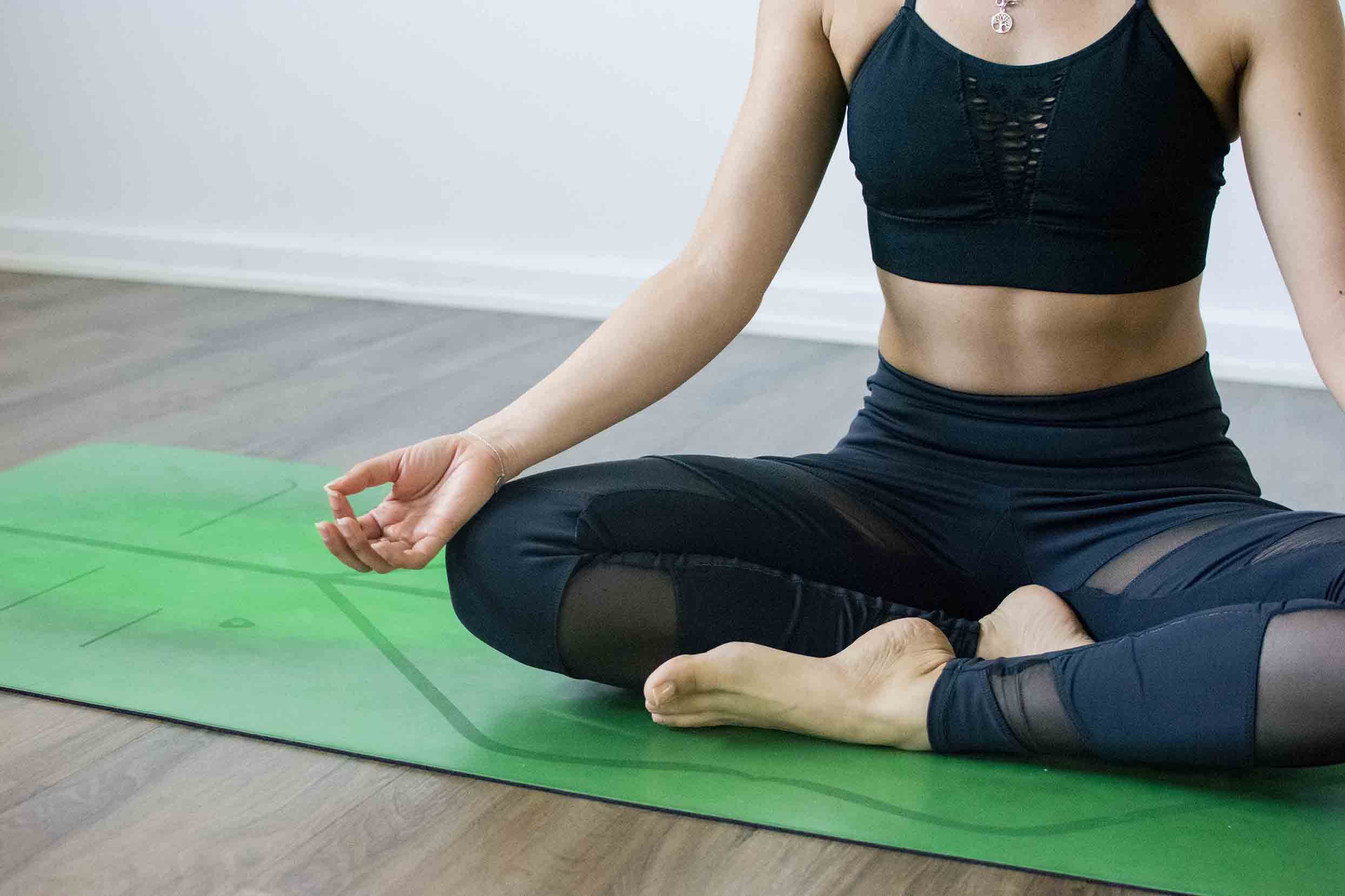
- Sit tall in Sukhasana (Easy Pose), on a cushion, or on a chair with both feet on the floor. Head, neck and spine stack up. Rest your hands on your knees.
- Close your eyes and breathe through the nose for a minute without changing anything. Notice where the breath moves: belly, ribs, chest.
- Set a count. Start with a 1-2 rhythm and no hold: inhale for four, exhale for eight. Do five rounds. If the long exhale feels tight, shorten both numbers.
- Now add the hold. Inhale for four. At the top, lower your chin toward your chest for Jalandhara Bandha and keep the breath in for four. Your face, jaw and shoulders stay soft.
- Lift your head first. Then exhale slowly through the nose for eight.
- Take one or two free breaths if you need them. Then begin the next round.
- Practise for 5 minutes at first. Build toward 10-15 minutes over weeks, not days.
- Finish with a minute of natural breathing and sit for a moment before you stand up.
You can close the nostrils with the thumb and ring finger during the hold, as in Nadi Shodhana (alternate nostril breathing). Some teachers do, some keep the hands on the knees and let the throat lock do the work. Both are taught.
Count in your head, on your fingers, or with a metronome app at about one beat per second. The count matters less than the rule behind it: the exhale after the hold should be as slow and smooth as the one before. If you have to gasp or rush the exhale, the hold was too long.
Ratios: how to progress
The classic way to lengthen the hold is by ratio, inhale : hold : exhale. The steps taught in many schools, among them the Bihar School of Yoga:
- 1-1-2: inhale 4, hold 4, exhale 8. Stay here for weeks.
- 1-2-2: inhale 4, hold 8, exhale 8.
- 1-3-2: inhale 4, hold 12, exhale 8.
- 1-4-2: inhale 4, hold 16, exhale 8. The ratio the old texts point to. With a 10-count inhale that is a 40-count hold, which takes most people years.
Move to the next ratio only when the current one is easy for a whole session. The breath should feel as calm at the end as at the start.
Bahya kumbhaka: the hold after the exhale
Once antara kumbhaka is steady, you can add a short hold at the bottom of the breath.
- Inhale for four. Exhale slowly for four, or longer.
- With the lungs empty, lower the chin and keep the breath out for two to four counts. The belly draws softly in.
- Lift the head and let the next inhale come in slowly. If it rushes in, the hold was too long.
A common beginner form is square breathing: inhale, hold, exhale and hold, all for the same count.
Kumbhaka with Ujjayi
Kumbhaka pairs well with Ujjayi (victorious breath). The soft narrowing at the back of the throat slows the air, so it is easier to keep the count even. Breathe in with Ujjayi, hold with the chin lowered, lift the head and breathe out with Ujjayi. In the Hatha Yoga Pradipika, Ujjayi is itself one of the eight kumbhakas.
What kumbhaka does
Some effects are easy to explain. Others have been claimed for it without much behind them.
- It slows the breath. A round of 4-4-8 takes 16 seconds, so you breathe about four times a minute. Slow breathing with long exhales shifts the nervous system toward rest and lowers the heart rate. Small studies of pranayama point the same way.
- It trains your tolerance for carbon dioxide. During a hold, CO2 builds up in the blood and that is what makes you want to breathe. With practice the urge feels less alarming. This is also why the hold feels harder than it looks.
- It holds your attention. Counting and waiting for the urge to breathe leave little room for wandering thoughts. That is why it is taught before meditation.
The old version of this page promised more oxygen in the blood, a cleaned respiratory system and relief from asthma, allergies and gut problems. None of that holds. During a hold, oxygen in the blood goes slightly down, and there is no good evidence that kumbhaka treats any illness.
Who should skip or modify it
- High blood pressure, heart disease, or recent heart or eye surgery: skip the holds, or ask your doctor first. A strained hold raises the pressure in the chest.
- Pregnancy: skip long holds, and skip bahya kumbhaka. Slow breathing without holds is fine.
- Asthma, anxiety or panic attacks: keep the holds short, or leave them out. For some people the air hunger itself can set off a panic response.
- Epilepsy, or a history of fainting: leave out the holds.
- Children: some traditions, the Bihar School among them, do not teach kumbhaka before about age 12.
- Never practise breath holds in water, in a bath, while driving or standing up. Fainting is rare when you sit and hold gently, and dangerous in those places.
Common mistakes
- Holding by force. Clenched jaw, lifted shoulders, a red face. Hold only as long as you can stay soft.
- Locking the throat hard. Pressing against a shut throat like lifting something heavy pushes up blood pressure. Jalandhara Bandha is a lowered chin, not a squeeze.
- Gasping after the hold. A sign the hold was too long. Shorten it by two counts.
- Breathing fast before the hold. Several quick, big breaths make a long hold easier and also make fainting more likely. Kumbhaka starts from slow, calm breathing.
- Opening the mouth. Breathe in and out through the nose the whole time.
- Adding bahya kumbhaka too soon. Learn the hold with full lungs first.
Build up to it with other pranayama
Kumbhaka works best on top of a steady basic breath. Good ones to learn first:
- Ujjayi, for a slow, even breath.
- Nadi Shodhana, where many schools first add a short hold.
- Bhramari (humming bee breath), for a long exhale.
After kumbhaka, faster techniques like Bhastrika (bellows breath) are often followed by a hold in more advanced practice. For the wider picture, read our introduction to pranayama and prana.
Where sources disagree
How long to hold. The Hatha Yoga Pradipika treats long holds as the goal and ties them to spiritual progress. Modern teachers such as B.K.S. Iyengar warn against strain and against holds that change the rhythm of the next breath. Both agree the hold should end before it turns into a fight. The difference is how far each pushes, and for a home practice the modern advice is the safer one.
The 1-4-2 ratio. Many books present 1-4-2 as the classical ratio. The old texts give counts and ratios, but they do not all give the same one, and several teachers today stop at 1-2-2 for good. There is no research showing one ratio works better than another.
Kumbhaka vs breath-holding methods. Methods that pair fast, deep breathing with long holds on empty lungs have made breath holding popular. They are a different practice. Fast breathing before a hold lowers CO2 and makes it easier to hold too long, which is how freedivers black out. Traditional kumbhaka starts from a slow, calm breath.
What the hold is for. In the tradition, the aim is kevala kumbhaka, a pause that comes by itself when the mind goes still. In Patanjali's Yoga Sutras (2.50-2.51) the fourth kind of pranayama goes beyond inner and outer holds. Researchers look at kumbhaka as slow breathing with CO2 tolerance. Those are two descriptions of the same few seconds, and you do not have to pick one.

To practise it with a teacher, start with Guy Powiecki's short kumbhaka tutorial, then the 15-minute kumbhaka pranayama class, or browse all our pranayama classes.
Frequently asked questions
What is the purpose of kumbhaka?
In the yoga tradition, kumbhaka steadies the breath so the mind can settle, as a step toward meditation. In plain terms, the hold slows your breathing to a few breaths a minute and gives your attention one thing to rest on.
How long should I hold my breath in kumbhaka?
Start with a hold as long as your inhale, about four counts, and exhale for twice as long. Lengthen it over weeks, never to the point where you gasp or rush the next breath. For most people that is somewhere between 5 and 20 seconds.
What are the 8 kumbhakas?
The Hatha Yoga Pradipika (chapter 2) lists eight: Surya Bhedana, Ujjayi, Sitkari, Sitali, Bhastrika, Bhramari, Murchha and Plavini. Each is a breathing technique that includes a hold. The text calls all its pranayamas kumbhakas.
Which kumbhaka is most powerful?
The texts rank kevala kumbhaka highest: a pause that happens by itself, without effort. Among the eight techniques, Bhastrika is often called the strongest because of its fast breathing. Neither is for beginners.
What is the difference between antara and bahya kumbhaka?
Antara kumbhaka is the hold after you breathe in, with full lungs. Bahya kumbhaka is the hold after you breathe out, with empty lungs. Learn antara first. Bahya is harder, and the urge to breathe comes faster.
Is kumbhaka safe?
Short, gentle holds while sitting are safe for most healthy adults. Skip the holds or ask a doctor first if you have high blood pressure, heart disease or epilepsy, or if you are pregnant. Never hold your breath in water or while driving.
What is kevala kumbhaka?
Kevala means "alone". It is the pause in the breath that comes on its own, without holding on purpose, and the Hatha Yoga Pradipika treats it as the aim of pranayama. You cannot force it. Some people notice a short version of it in deep meditation.