Ananda Balasana (Happy Baby Pose): How to Do It Step by Step

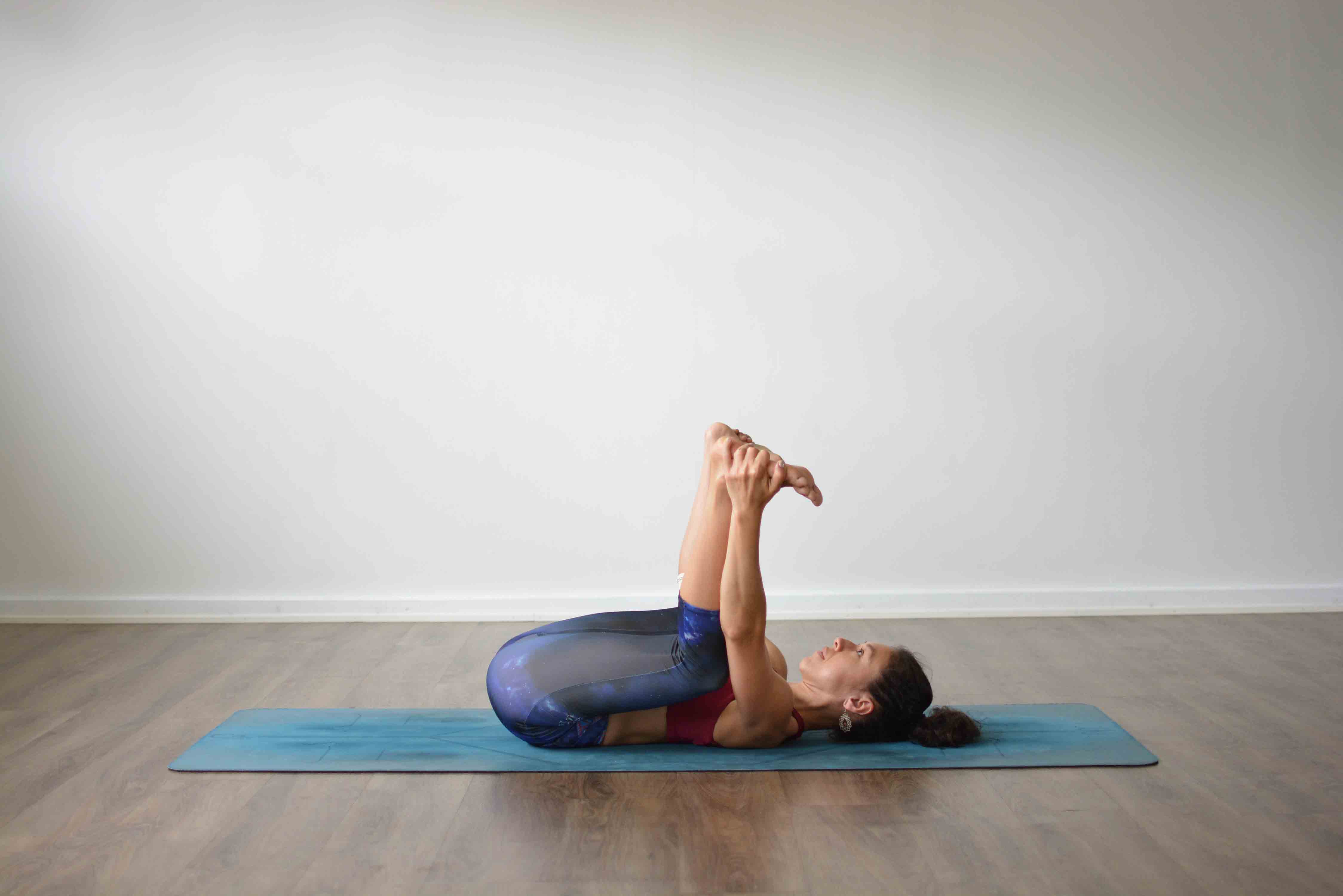
Ananda Balasana (Happy Baby Pose) is a yoga pose done lying on your back: you bend your knees toward your armpits, hold the outsides of your feet with the soles facing the ceiling, and draw the knees down toward the floor. It stretches the inner thighs, the groin and the back of the hips, and it lets the lower back settle on the mat. It is an easy pose to start with, and most people can do some version of it on the first day.
Pose type: supine hip opener. Level: beginner. Props: a strap if you cannot reach your feet, a folded blanket under the head if your chin lifts.
What Ananda Balasana means
The name has three Sanskrit parts: ananda, bliss or happiness, bala, child, and asana, pose. Watch a baby lying on its back holding its own feet and you have the shape. Do not mix it up with Balasana (Child's Pose), the kneeling rest pose, which shares the word bala and little else.

How to do Happy Baby Pose, step by step
- Lie on your back with your legs straight and your arms along your sides. Let the back of your head rest on the mat.
- Breathe in. As you breathe out, bend your knees and draw your thighs in toward your belly.
- Open your knees a little wider than your torso and move them toward your armpits.
- Stack each ankle straight above its knee, so your shins point up at the ceiling. Flex your feet, as if the soles were standing on the ceiling.
- Hold the outer edges of your feet: left hand to the outside of the left foot, right hand to the right. Your arms pass inside your shins. If you cannot reach, hold your ankles, your shins or the backs of your thighs.
- Press your feet up into your hands while your hands draw the feet down. The two forces meet, and your knees move toward the floor beside your ribs.
- Let your tailbone and sacrum stay heavy on the mat. Keep your shoulders and the back of your head down, and soften your jaw.
- Stay for 5-10 slow breaths, or up to a few minutes in a Yin class. On each exhale, let the knees sink a little. To come out, release the feet, hug the knees in and lower one foot at a time to the floor.
The cue that makes the pose: ankles over knees, and let the sacrum drop. If the tailbone lifts off the floor, you are pulling too hard.
Benefits of Happy Baby Pose
With both hips bent past 90 degrees and turned out, Happy Baby lengthens the adductors on the inside of the thighs, the inner groin and the hamstrings where they attach at the sitting bones. Your arms do the work, so the legs can let go. That is the main use of the pose.
- Hips and groin: a stretch for the inner thighs and the back of the hips without any load on the knees.
- Lower back: lying on your back with the knees drawn in lets the lower back flatten and rest. Many people find it a comfortable position after a long day of sitting or standing.
- Slowing down: the pose is still and supported, which makes it easy to breathe slowly. The slow exhale is what calms you, and the pose gives it a good place to happen.
Pelvic floor physiotherapists sometimes use Happy Baby with slow belly breathing to help an overactive pelvic floor let go. That is a clinical use with a sound rationale and little research behind it. It is not a treatment for leaks, which can come from a weak floor as easily as a tight one.
Who should skip or modify Happy Baby Pose
- Pregnancy: after the first trimester, many teachers and midwives advise against lying flat on the back for long, because the weight of the uterus can press on a large vein. Keep it short, or practise it on your side or with the upper back raised on a bolster. Ask your midwife.
- Knee or hip injury, or a hip replacement: hold the backs of the thighs instead of the feet, and keep the knees narrower. Follow your surgeon's or physiotherapist's advice on how far the hip may bend.
- Neck problems: keep a folded blanket under your head and hold the thighs, so your shoulders and neck stay on the floor.
- Pain in the groin or lower back: ease off. A stretch is fine. A pinch at the front of the hip or a sharp pain means come out.
Our 10 tips to avoid yoga injuries apply here too.
Common mistakes
- Tailbone lifting. Pulling the feet too hard rolls the pelvis up and rounds the lower back off the mat. Hold the ankles or shins instead, and let the sacrum stay down.
- Head and shoulders coming up. Reaching for the feet lifts the chest. Use a strap, or hold further down the leg.
- Feet drifting in or out. Keep the ankles over the knees. When the feet swing toward the midline, the stretch moves away from the inner thighs.
- Holding the breath. Breathe into the belly. You should feel it rise against your thighs.
- Forcing the knees to the floor. For most people they will not get there, and they do not need to.
Preparatory poses
Happy Baby is a first pose for many people. These warm the same areas:
- Pavanamuktasana (Wind-Removing Pose): knees to the chest, one leg or both, on your back.
- Baddha Konasana (Bound Angle Pose): the same outward rotation and inner-thigh stretch, sitting up.
- Malasana (Garland Pose): a deep squat with the knees wide, which is Happy Baby turned upright and loaded with your own weight.
Follow-up poses
- Upavistha Konasana (Wide-Angle Seated Forward Bend): the inner thighs again, with straight legs.
- Setu Bandha Sarvangasana (Bridge Pose): after the hips have folded deeply, Bridge opens the front of them.
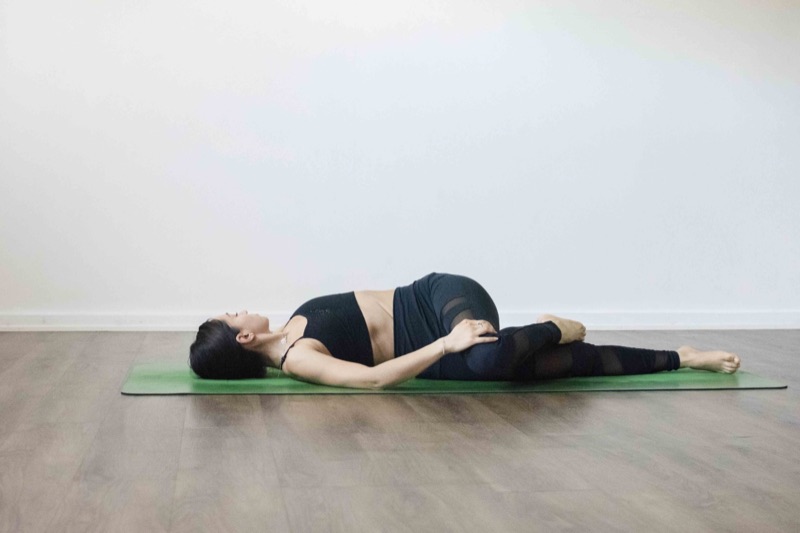
- A gentle supine twist, then Savasana (Corpse Pose). Happy Baby is often the last active pose before Savasana at the end of a class.
Variations
- Half Happy Baby (Ardha Ananda Balasana): one leg in the pose, the other straight on the floor. Easier on the hips, and it shows you which side is tighter.
- With a strap: loop a strap around the arch of each foot and hold the ends. The shoulders stay down.
- Rocking: roll slowly from side to side, massaging the muscles along the spine against the mat.
- Yin version: hold the backs of the thighs or the shins and stay 2-3 minutes, arms relaxed. Our Yin classes use long holds like this.
For more work around the joint, read yoga for the hips: strengthening exercises.
Daniel Scott's 30-minute Hatha class Halftime: Happy Baby Flow is built around this pose, level 1, with two blocks.
Frequently asked questions
What is Happy Baby Pose good for?
It stretches the inner thighs, the groin and the back of the hips while your lower back rests on the mat. Because it is still and supported, it is also a good place to slow your breathing, which is why many classes put it near the end, before Savasana.
Who should not do Happy Baby Pose?
Take care with a recent knee or hip injury, a hip replacement or neck problems: hold the backs of the thighs instead of the feet. After the first trimester of pregnancy, keep time flat on your back short or practise it on your side, and check with your midwife.
Is Happy Baby good for the pelvic floor?
Pelvic floor physiotherapists use it to help a tense pelvic floor relax, combined with slow belly breathing. The idea is sound, but there is little research on the pose itself. If you have pelvic pain or leaks, see a pelvic floor physiotherapist, because a weak floor needs different work than a tight one.
Does Happy Baby Pose release gas?
Some people find it does. Drawing the thighs toward the belly puts light pressure on the abdomen, the same idea as Pavanamuktasana, the Wind-Removing Pose. There are no studies on it, but it is a comfortable position to try when you feel bloated.
How long should you hold Happy Baby Pose?
Five to ten slow breaths is a normal hold in a Hatha or Vinyasa class. In Yin yoga you might stay two to three minutes, holding the shins or thighs so the arms can relax.
What if I cannot reach my feet in Happy Baby?
Hold your ankles, your shins or the backs of your thighs, or loop a strap around each foot. What matters is that your shoulders, head and tailbone stay on the mat.
Practise it with a teacher
Over 600 online yoga classes and programs for $4.99 a month. Cancel any time.
Become a member